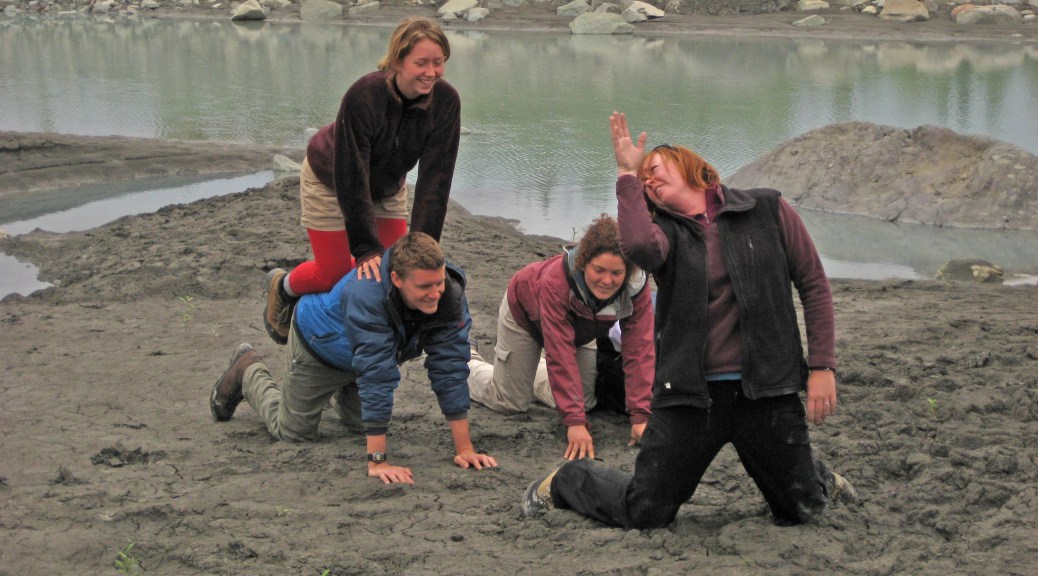
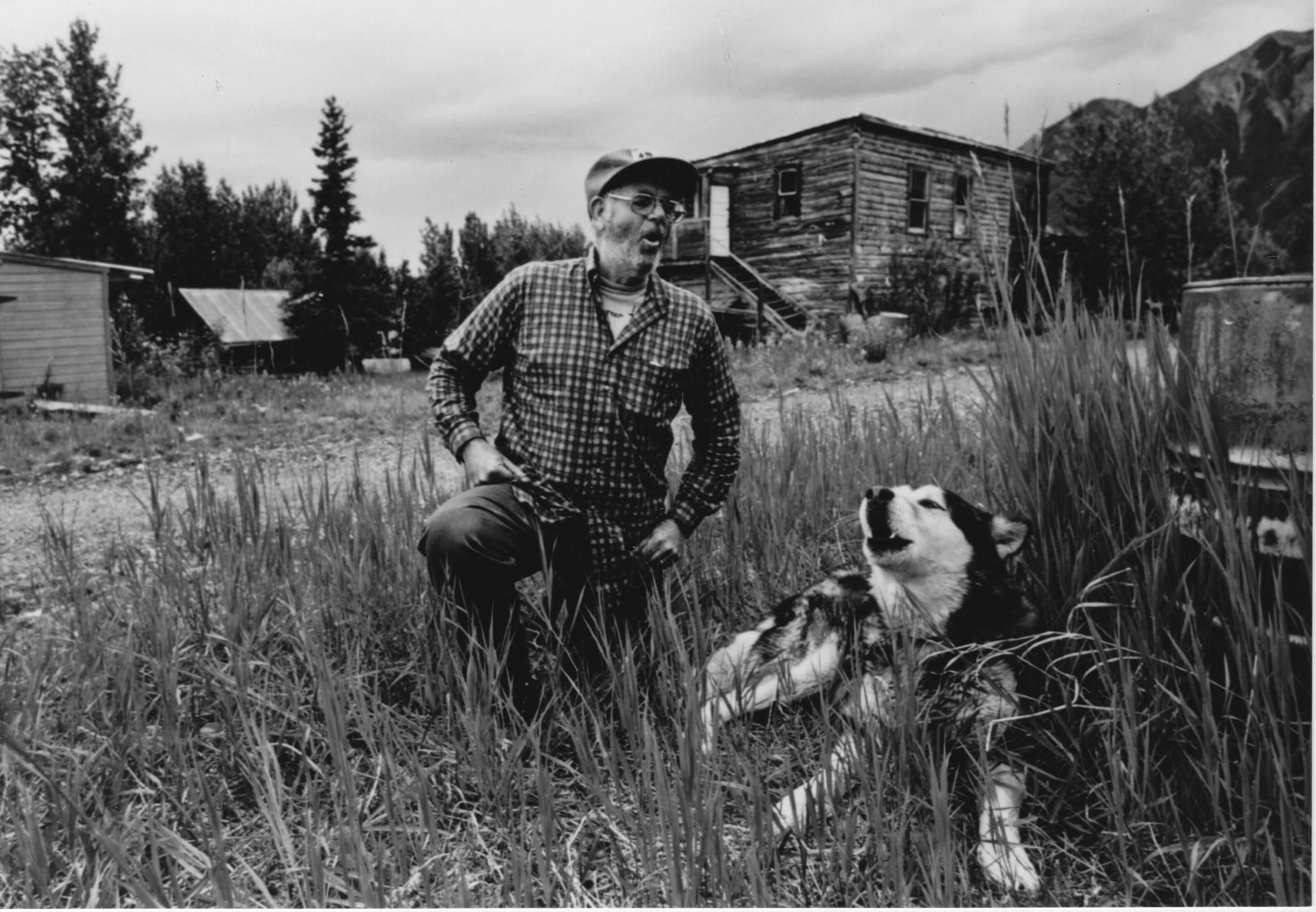
Thanks to Nancy Simmerman for the photo of Professor Ken Norris & hound and to Shawn Hazboun for the photo of students demonstrating Wrangellia riding the Earth’s crust to collision with North America.
A people-friendly community that chooses to be entirely without motor vehicles on land
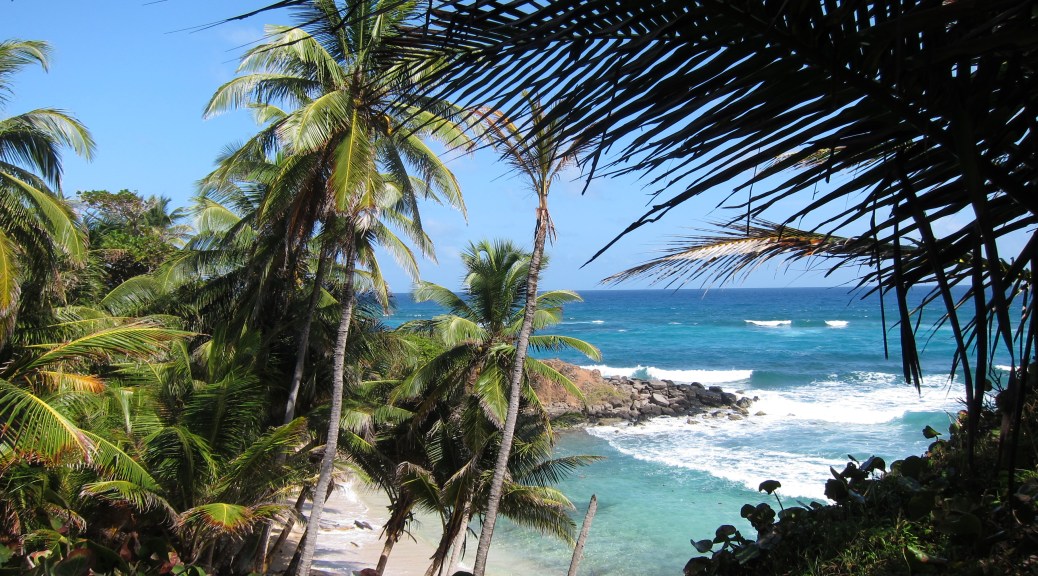
I’m just back from a couple of weeks on Little Corn Island, a square mile of land fifty miles off the Caribbean coast of Nicaragua. It’d be a great sister city for my town of McCarthy, Alaska, and I recommend it to McCarthyites as a place to visit.
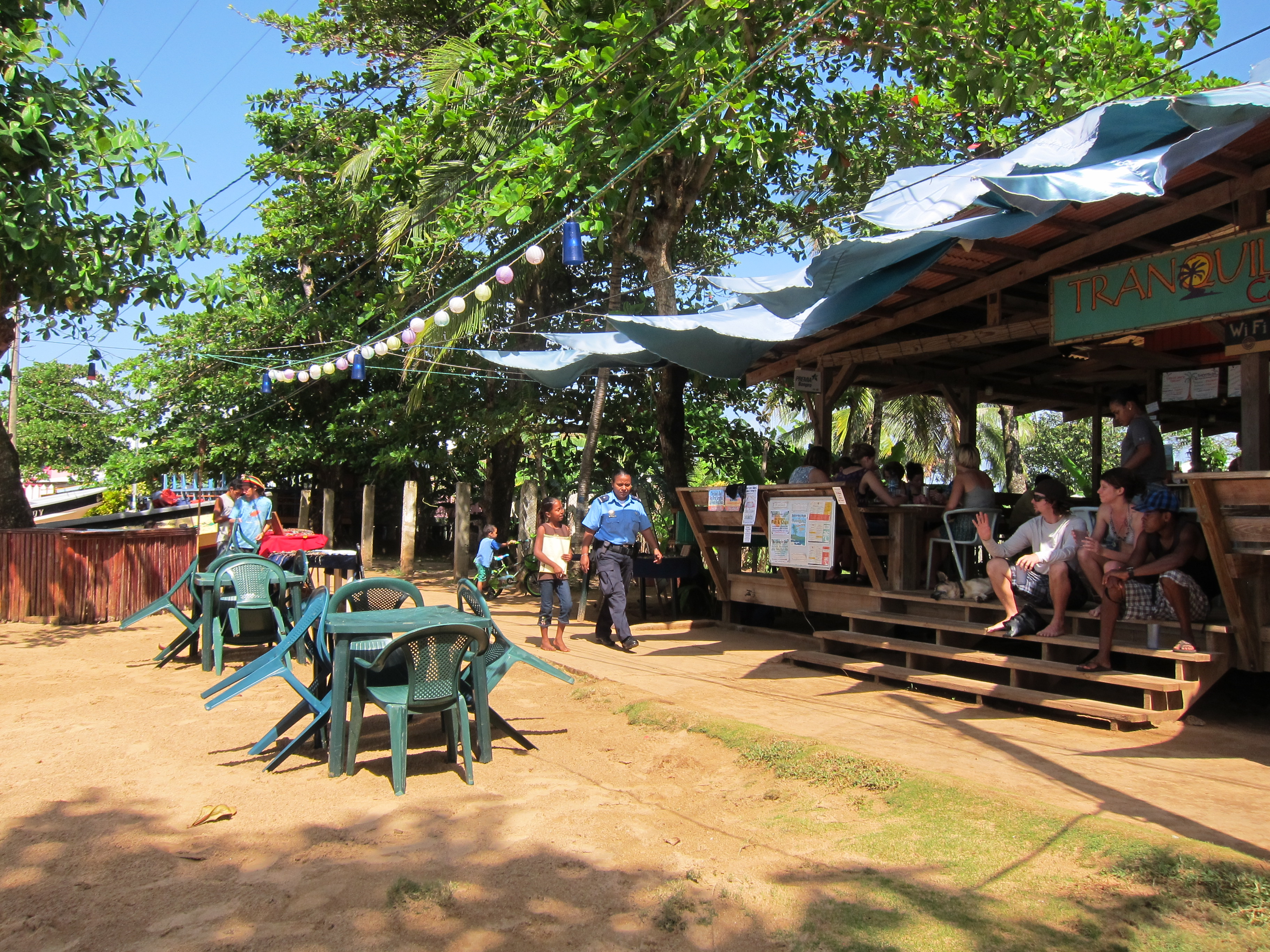
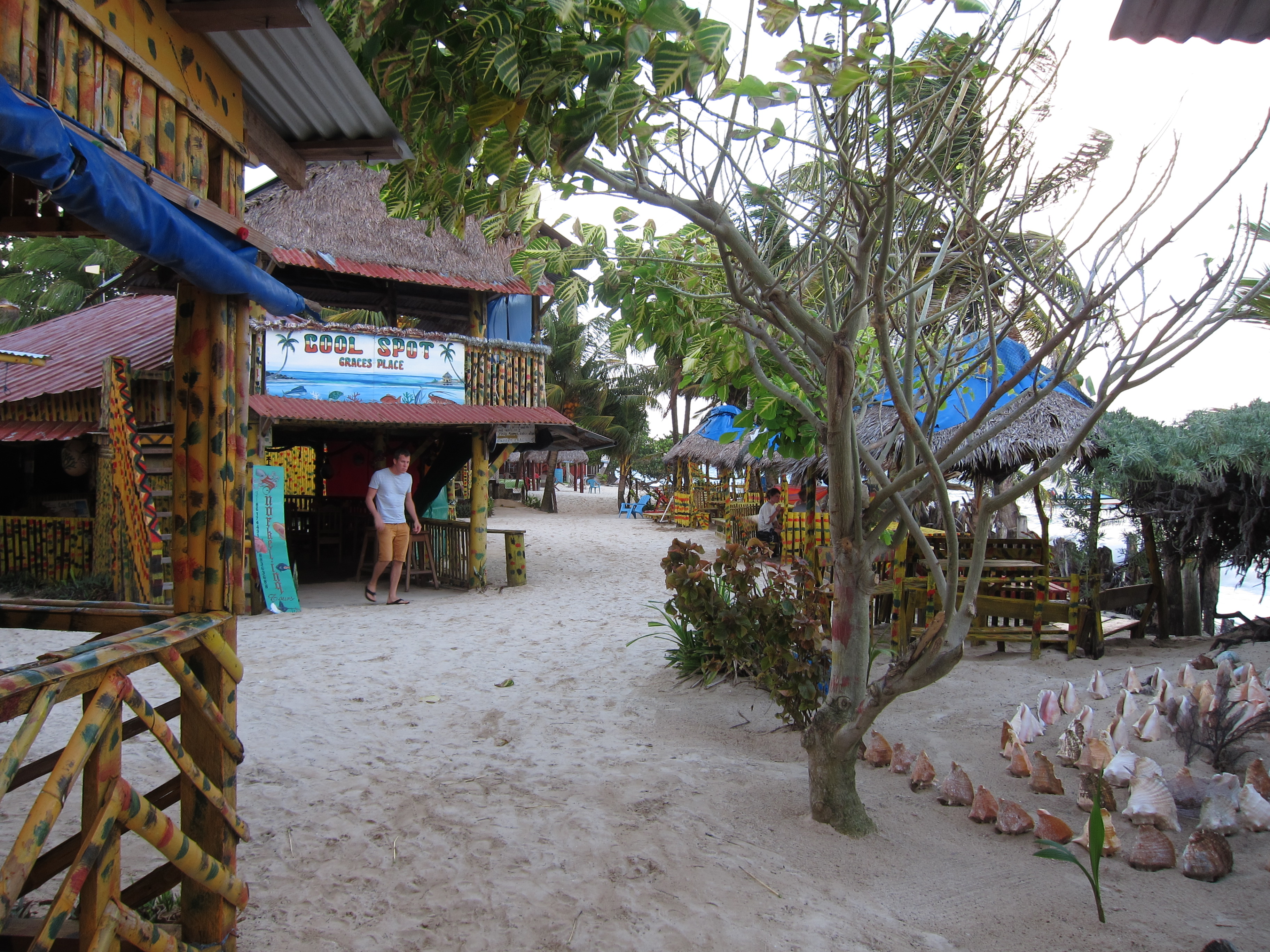
Little Corn has beaches, forests, a village on the leeward side, about 1200 residents who are mostly English-speaking creoles of mixed black heritage and Spanish-speaking mestizo people from Pacific Nicaragua, along with tourists who are mostly young and athletic snorkelers and divers staying in funky beach lodges on the breezy windward side. Although they use motorboats in the ocean, the community has decided to be entirely vehicle-free on shore: walking and bicycles only. There are paths, some paved, but no roads. “Mainstreet” is like a wide sidewalk.
A senior member of one of the local extended families told me that the elected island government made the motor vehicle-free decision with widespread support, though some younger people disagree. He said he’d been involved in lobbying through funding from Managua for paving the cross-island path to the windward tourist lodges and extending the electric line there from the village generator (operates noon-2am, when not broken), at the same time he supported keeping motor vehicles off the island. That position, pro-development with conditions to maintain quality of life for locals and unique attraction for visitors, of course reminds me of McCarthy.
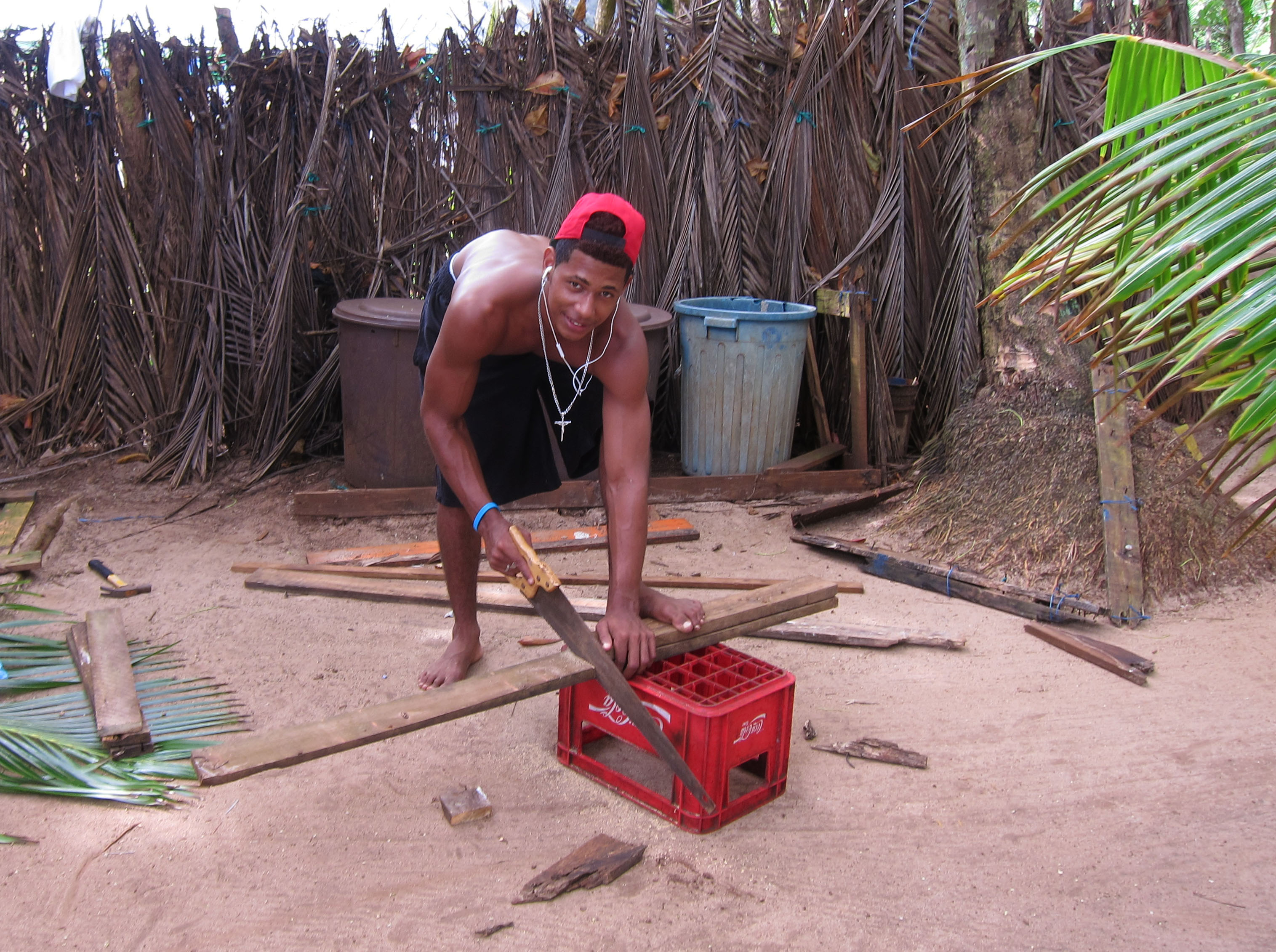
Young man working at a tourist lodge, barefoot with iPod
Although on the average materially very poor, the people I met are in general the happiest, healthiest and most upbeat I have encountered. The brightness in their eyes is as unique as what I used to notice in some residents of the Alaska’s Wrangell Mountains decades ago. That’s recognizing that my stay on Little Corn was brief, communication limited by language differences, and there’s much about the culture that I don’t understand.
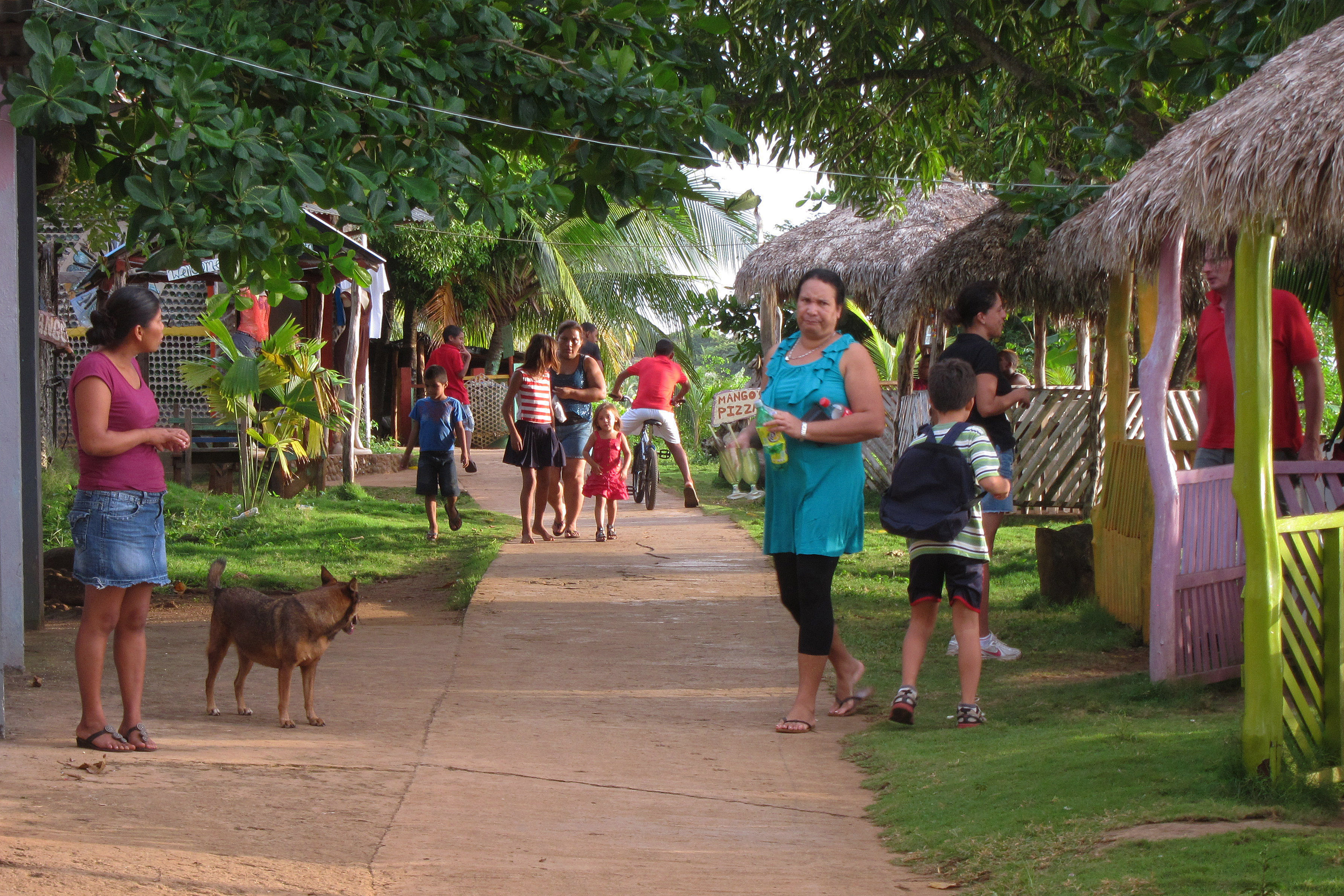
Downtown Little Corn Island
Access to Little Corn is by boat from Big Corn, which has roads, vehicles and an airport with prop-plane connections to Managua. Most passenger ferry service to Little Corn is by open pangas that make the crossing from Big Corn in about forty minutes, depending on conditions. Panga drivers can string a long piece of visqueen plastic along the side of the boat, for passengers to hold up to shield off wind-blown spray.
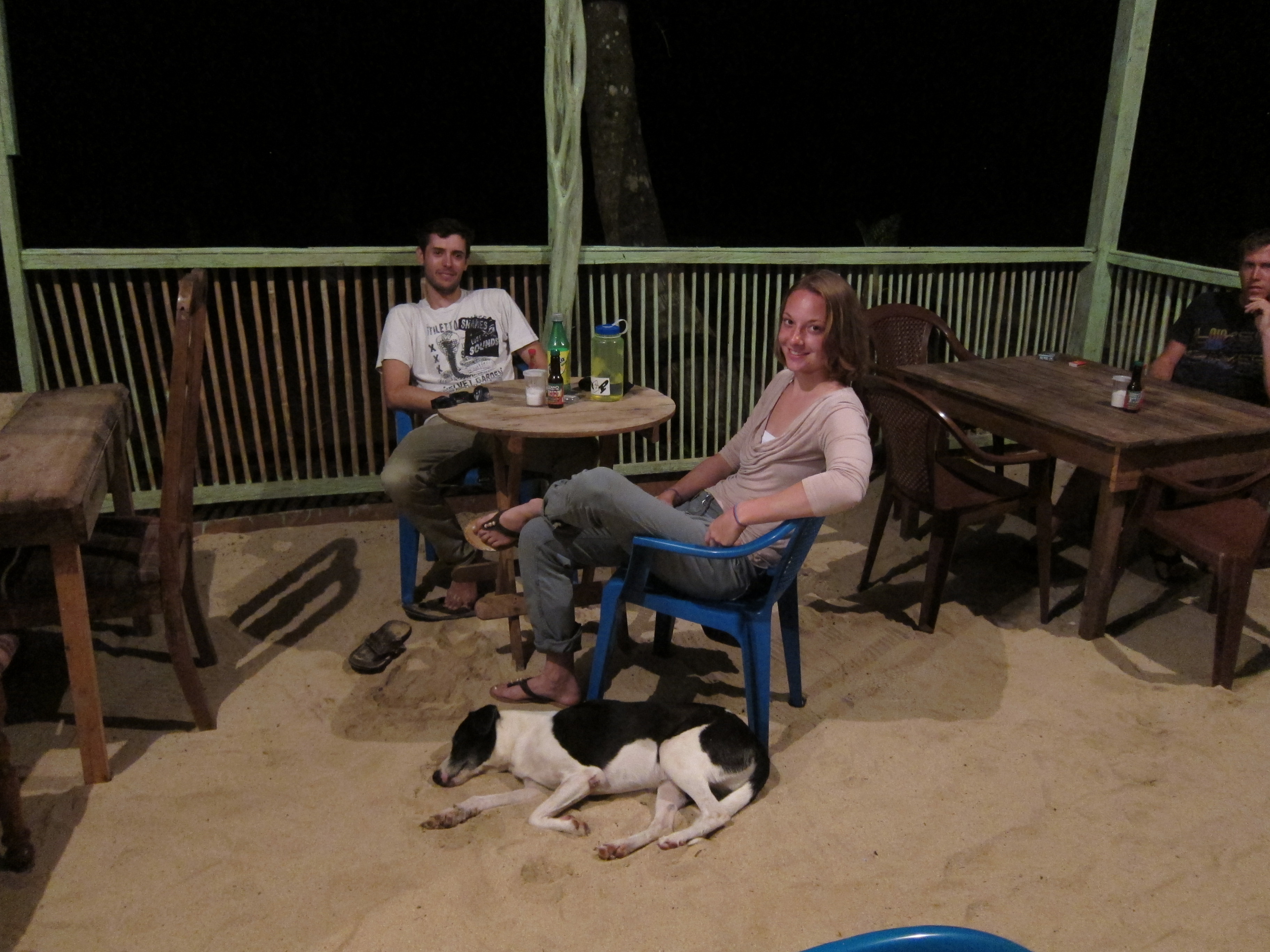
A relaxed meal at Hatty’s El Bosque restaurant
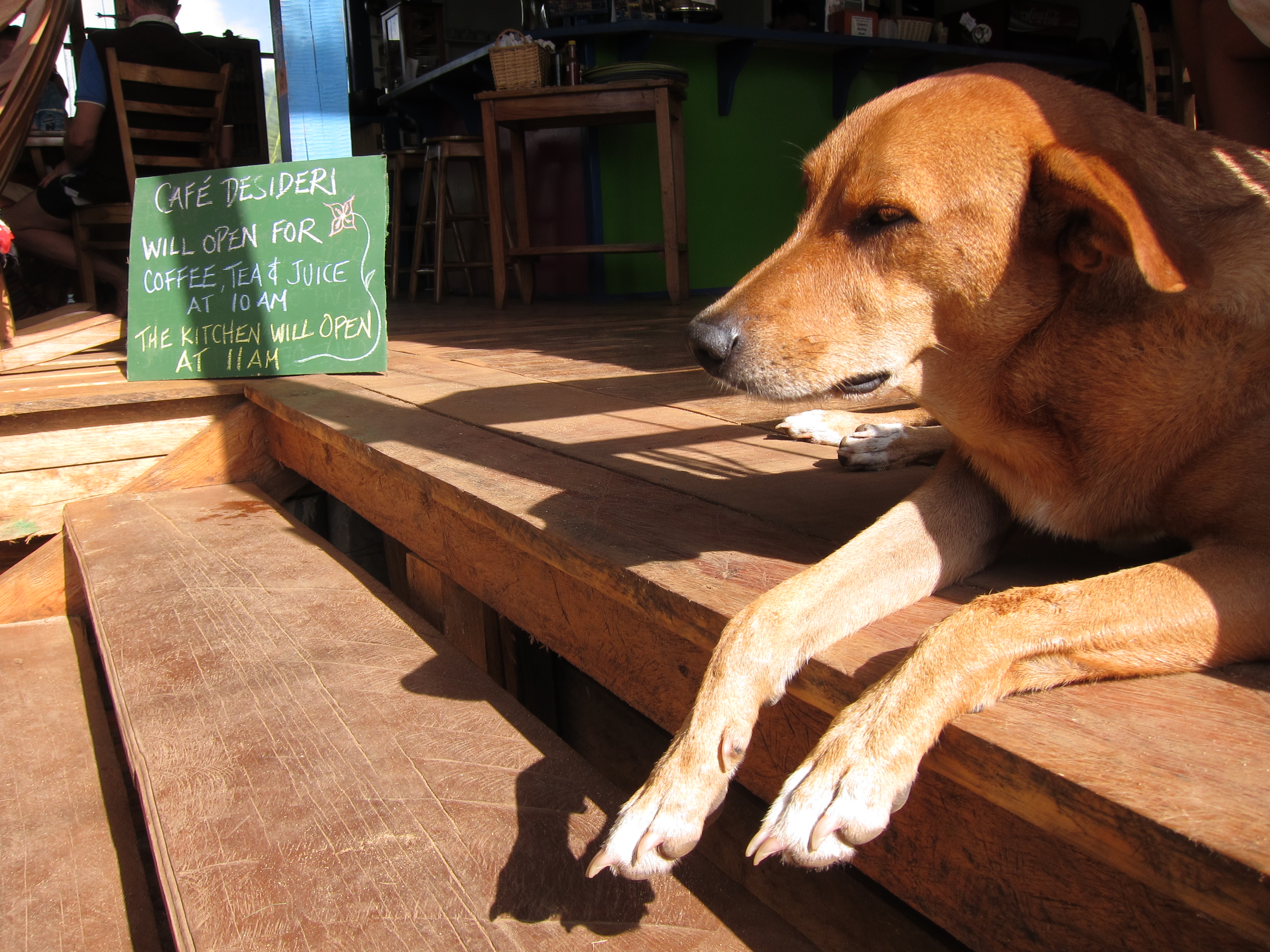
Recently, Little Corn has become a tourist destination. Most of the visitors I met are young people from North America or Europe traveling about the world inexpensively. Most of the lodging is in basic one-room cabins on or near the beach, though a few are more up-scale and a high-end ($300/night) version has opened on a secluded beach. Among other activities, that one hosts yoga retreats. In general, the basic lodges and restaurants are locally owned and the fancier ones, more efficient and clock-oriented, are foreign owned and operated. A meal in a locally-owned restaurant can take hours, including conversations among the guests and with the staff, which I enjoyed.
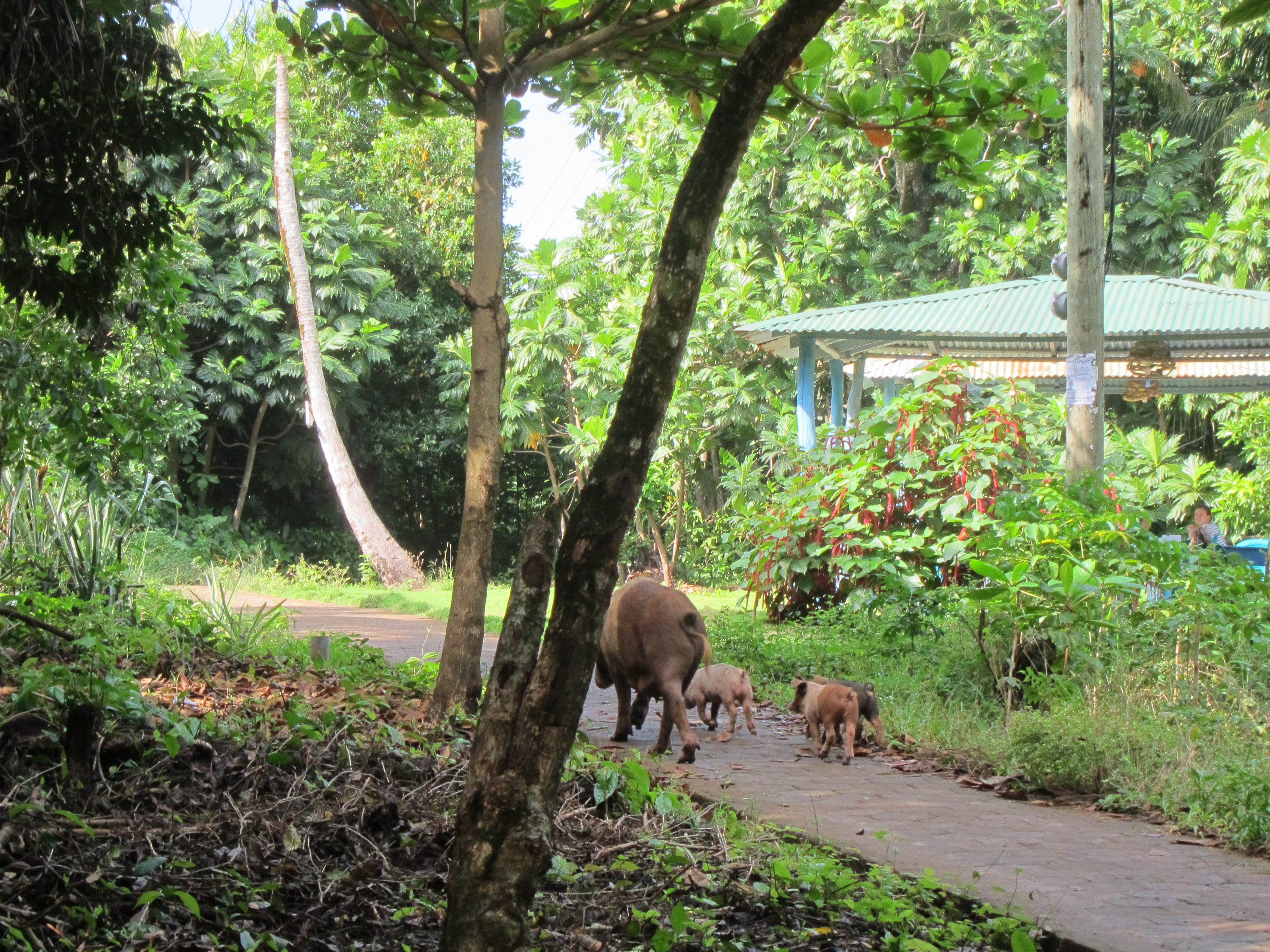
Other sources of income/sustenance I heard about talking with locals include commercial fishing, traveling globally as cruise ship staff, and subsistence on fish, fruit, cocoanuts, and other garden crops. Chickens are everywhere. Cattle graze on the uplands. I didn’t notice signs of hunger. Coming from the USA, the relative absence of overweight people on Little Corn and their erect posture was dramatic. I didn’t have much time on Big Corn, but heard from a friend that residents there are significantly heavier. Little Corn is different.
A man on Big Corn explained that he got most of his income from multi-month stints on a lobster boat crew. He said he got 10 cents/pound for lobster selling for $16/pound at Costco.
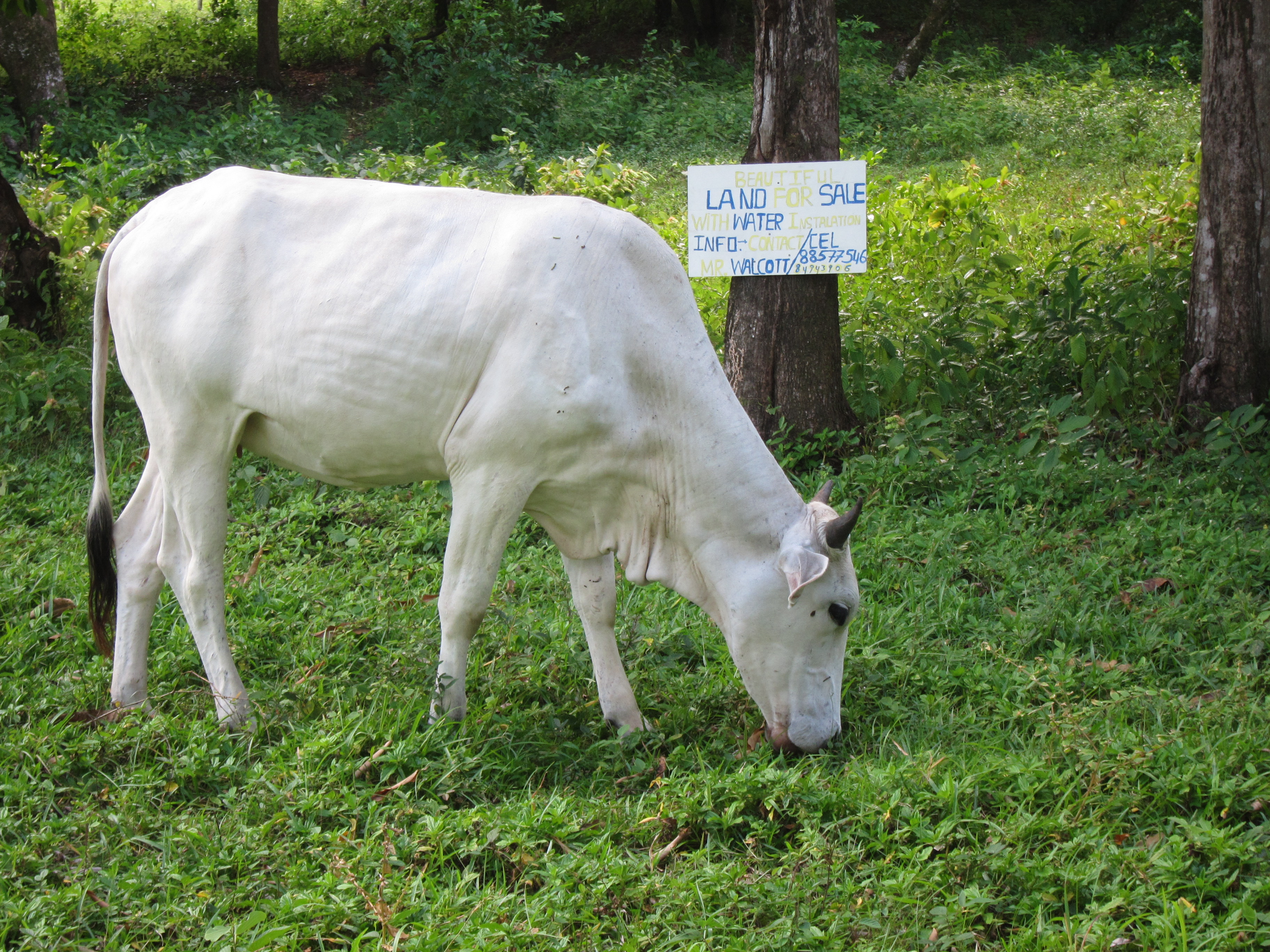
Land for sale
I noticed a number of affluent, new residences owned by expatriate foreigners, located in desirable locations with views and moderate breezes. One couple, who had moved from the US, kindly invited me into their home. I enjoyed helping with one of their projects, harvesting a piece of driftwood to be cut with their chainsaw mill for use in creative furniture construction. That reminded me of McCarthy. One person told me that in general locals see foreigners’ house construction as a positive source of jobs and not a problem, though limits are being placed on new businesses being established by outsiders. I’m not clear on the details of that.
My visit was a glimpse into an place that’s rapidly changing and unstable. Young children are playing everywhere, old people are infrequent, and so the population is evidently exploding. I don’t know to what extent that includes migration from the mainland. The beaches are rapidly eroding, with palm trees falling into the sea. I don’t know why. I went diving on the reef once, but didn’t return, because there were so few fish and the coral is algae-covered, I presume largely from overfishing. I heard that the local government had established a no-fishing zone encompassing the reef around the island, but had no means to enforce it when fishing boats came over from Big Corn. Depletion of the reef probably greatly affects the potential for tourism centered on snorkeling and diving. Tourism is quite new to the island, presumably rapidly changing, and I don’t know how the mix of local and foreign control is playing out. The island I experienced is clearly unsustainable.
Despite that and the material poverty, the evident joy, openness and self-confidence of most local people I met is impressive. I’m struck by the comparison with an American marine biologist, about thirty years old with a graduate degree, with whom I chatted at a beach restaurant. He was vacationing on his way back to the US for a break from studying sea turtles on Central American Pacific beaches. I found him cynical and depressed about what’s happening to the turtles and environmental decline. Here’s a person who has everything going for him, within the reality of the world: interesting, useful work with the possibility of doing some good; relatively vast material affluence and the ability to travel; youth and health. Yet I felt a deep unhappiness. All around him on Little Corn — I don’t think he recognized it, or the difference with himself — were people his age, living in the midst of that environmental condition, inescapably caught in its immediate consequences, uneducated, comparatively with nothing, yet happier, in an essential way I’d say more free. If he knew how to take responsibility for his own happiness, to see the possibility, what joy he could bring into the world, for himself and for those around him. And I suspect he’d be more successful in his conservation work, too.
What follows is my photo essay about the island, focusing mostly on the transportation/access aspects that make it interesting in conjunction with McCarthy and regarding the larger questions of the consequences of motor vehicles and the possibilities for conscious decisions about their use.
Uncrowded at high season, windward lodges are on the beach.
Downtown, in the village
Beach erosion:
Paths:
Mainstreet in the village. No motor vehicles on the island, none, never, by local community decision, even though they freely and competently use motorboats on the water.
Mainstreet downtown
Mainstreet downtown
Primary cross-island path, near junction with the path through downtown
On the path across the island to the windward beach & lodges
Path along the beach to the windward lodges
Breeze on the windward path
Rosa’s restaurant along the main cross-island path
Side path to Casa Iguana lodge, near junction at Rosa’s
Combination ramp/stairway on the cross-island path, for freight carts, bicycles and pedestrians
Residential neighborhood
Residential neighborhood, with powerlines from the generator that runs noon-5am, unless broken
Pathway to the baseball field, cell tower & north beaches/lodges
On the path to Ensueos lodge
Pathway at Casa Iguana
Traffic:
I wonder if some of these kids have ever seen a car, truck or motorcycle.
Visitors
Teenagers hanging out
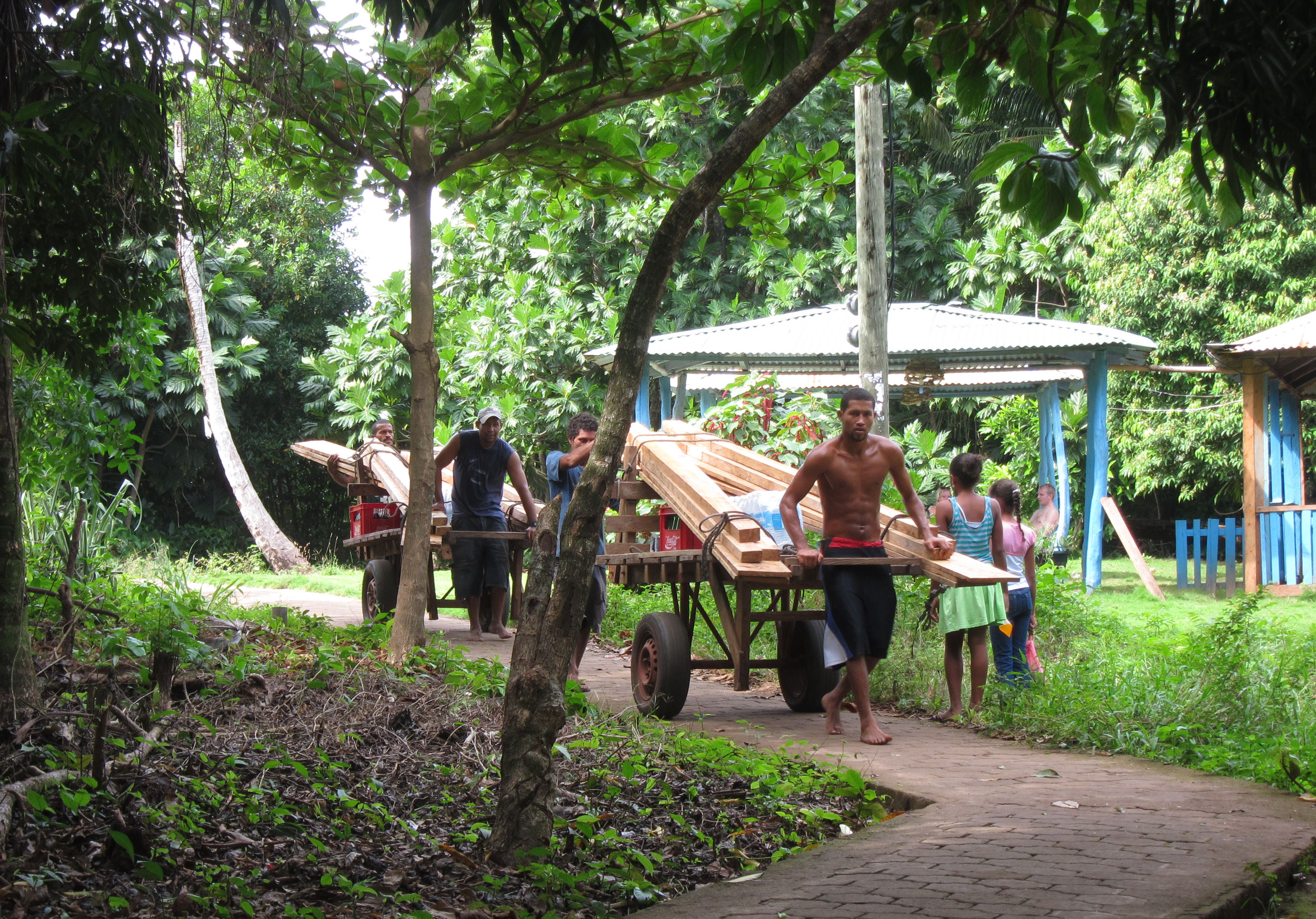
Freighting:
Pangas (passenger ferries) depart for Big Corn, while the weekly supply boat unloads
Almost everything comes in on the weekly supply boat
Gerardo Tinico delivering supplies to Casa Iguana
Carrying eggs
Work animal
Islanders are familiar with & capable of using motors on the water, though not allowing them on land.
North side lodges are accessed by boat as well as pathways
Moving supplies from the beach to the upscale resort Yemaya
Businesses:
One of several small lodges on the windward beach
Downtown
Foreign-owned tourist hangout
Phone company
Iguana lodge entry
Volleyball court at Iguana lodge
Store
Upscale Yemaya lodge hosts yoga retreats.
El Bosque (“the forest”) restaurant on the main path across the island
Eating at El Bosque
Owner/operators of El Bosque restaurant
Hetty Catrall Padilla in the kitchen where she creates excellent meals
Barracuda dinner, with rice, vegetables, potatoes and salad
Fresh bread comes out of the oven during the early afternoon.
Pizza parlor
Bottle wall of the pizza parlor during the day
Bottle wall at night
New lodge under construction
Duct tape: Local stores are small, but they sell it..
Residences:
Path through the residential area of the old village
Neighborhood recycling station with residence behind
New houses owned by foreigners, located with breezes and views
Bruce & Mary Jane, from the US, live in this beautiful home they built along the windward beach.
(I’m not sure yet where this essay is headed. I’ll keep working on it. Among other things, it shows my method of inquiry. Perhaps you’ll find it interesting for that. If you have comments, I’d appreciate hearing from you.)
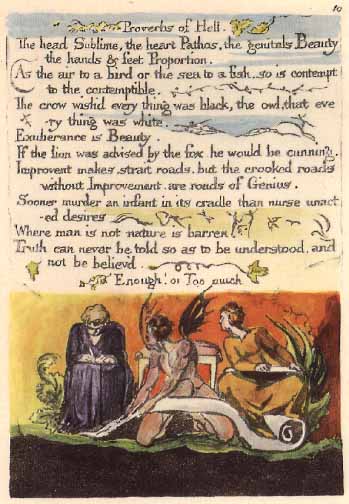
Improvement makes strait roads, but the crooked roads without Improvement, are roads of Genius. –William Blake, The Marriage of Heaven and Hell
One of the secret strengths of the Ecole Normale, it must be admitted, is its ability to form independent beings, since it will take in wayfarers who turn away from the great superhighways. It was obvious that those who chose one of these would go far, but you must take into account a primitive need for freedom, for autonomy.
When I took my degree in mathematics, I too found myself in some sense on a superhighway, and my change of course and path, from the sciences to literature, I was not made in order to choose a different superhighway.
This entry began as a reflection into Serres’ use of “path” and “superhighway” to describe intellectual inquiry and careers. As a young scholar, he decided not to stay on the currently dominant superhighways.
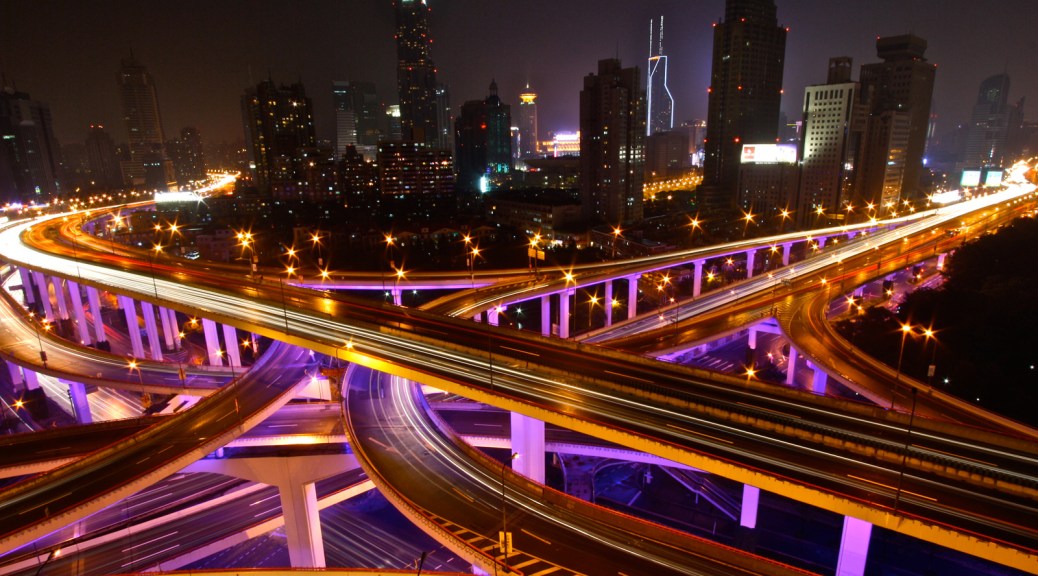
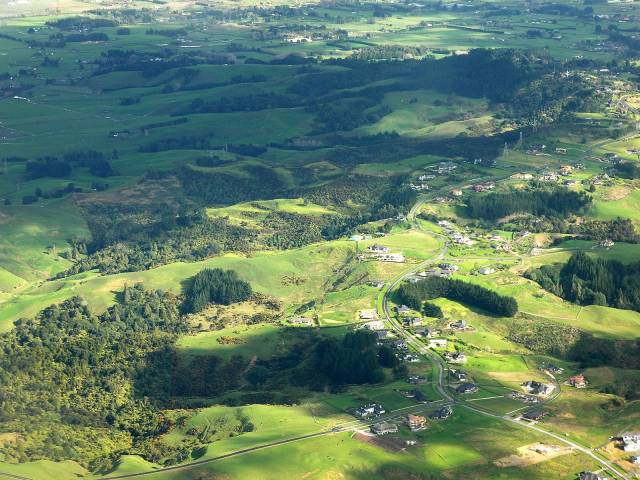
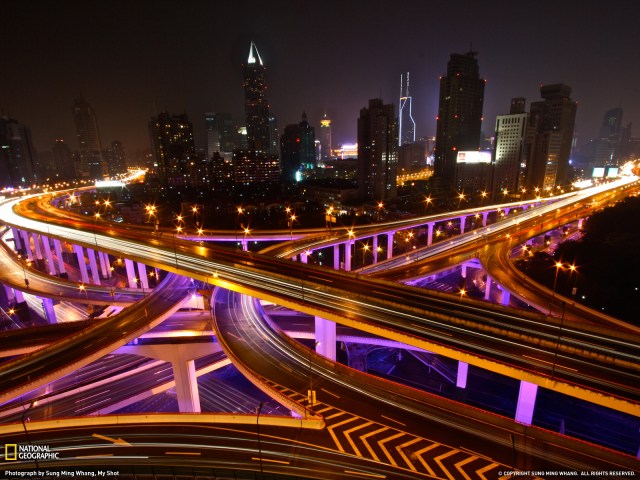
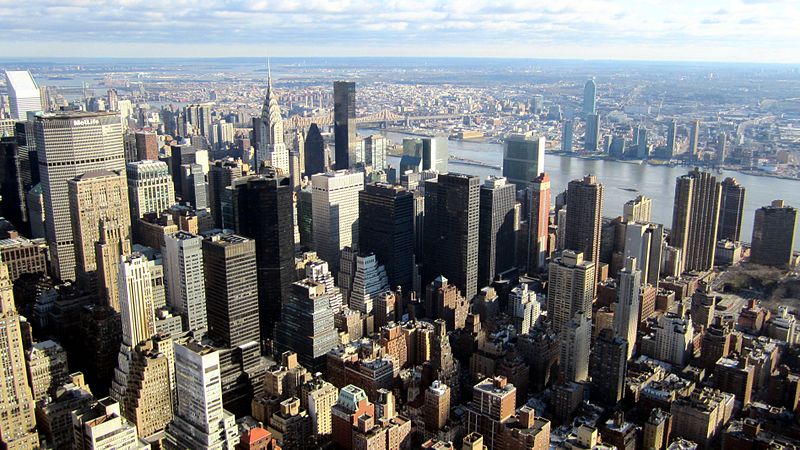
That led me to sit with (in the meditative sense) photos of two types of landscapes, one with superhighways and the other with small roads and pathways. I felt the impression they made on my senses and was reminded of my experiences in these sorts of places. That developed my understanding of Serres’ metaphors in ways that go beyond the conceptual, engaging the psyche. Doing that helped me realize that perceptions through the senses, memories, the psyche and conceptual analysis all play back and forth to develop each other and expand understanding. It’s a way of learning: Begin with a metaphor, go into it in all these ways, feel and see where it leads, illuminate the network of interconnections and nodes, expand them. At the basis is a contemplative attitude, receptive, respectful, curious, but also willing to test and challenge for veracity, accepting of the tension between the modes.
Note the differences between this method of learning and what we are explicitly taught in most schools. It’s more like the fine-grained wandering of pathways on a hilly landscape than a superhighway cutting through. (But note — see the photos below — that superhighways can also be beautiful.)
Without Contraries is no progression. Attraction and Repulsion, Reason and Energy, Love and Hate, are necessary to Human existence.
From these contraries spring what the religious call Good & Evil. Good is the passive that obeys Reason. Evil is the active springing from Energy.
Good is Heaven. Evil is Hell.
The voice of the Devil.
All Bibles or sacred codes have been the causes of the following Errors.
1. That Man has two real existing principles Viz: a Body & a Soul.
2. That Energy, call’d Evil, is alone from the Body, & that Reason, call’d Good, is alone from the Soul.
3. That God will torment Man in Eternity for following his Energies.
But the following Contraries to these are True
1. Man has no Body distinct from his Soul for that call’d Body is a portion of Soul discern’d by the five Senses, the chief inlets of Soul in this age
2. Energy is the only life and is from the Body and Reason is the bound or outward circumference of Energy.
3 Energy is Eternal Delight
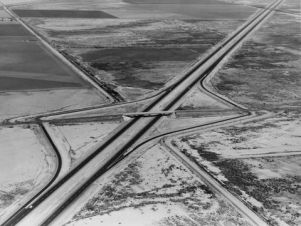
New Zealand countrysideShanghai freeways at night Photo by Sung Ming Whang National Geographicphoto by C.T. SewardInterstate 10 southeast of Casa Grande, Arizona, 1967 Federal Highway AdministrationLos Angeles freeway interchange photo by ngerda
Shanghai, China photo by Peter MorganSeoul, Korea, near by Han River photo by Patriotmissile at the English language WikipediaNew York City, Overview of Manhattan from the Empire State Building photo by Hakilon
Starting into Murry Code’s book on Whitehead today, I have the sense that Euro-American imperialism hasn’t ended, but has shifted to a pervasive form that is transmitted culturally, so global now that it is generally taken as a given, invisible as the ocean is to the fish in the sea. At its core is
…a Grand Myth of Scientific Superrationality – the idea that science exemplifies the epitome of rational thought.
This powerful myth appears to be the principal support for an inherently violent and imperialistic reason. It would therefore be well for me to try to spell out what I mean by imperialism. Following Edward Said, I understand this to refer to ‘a political philosophy whose aim and purpose for being is territorial expansion and legitimation.’ But he goes further and notes that the term refers not merely to a violent conquest of foreign
territory; it also alludes to attempts to subjugate the belief systems of others. No modern mode of thought seems more efficient in this respect than science, whose usurpation of the vital function of meaning-making tends to be legitimated by contemporary natural philosophers who style themselves as naturalists even as they turn their backs on nature and anchor their philosophical investigations in scientific theories.
A culture that is in thrall to a burgeoning technoscience recalls, in other words, the Eurocentric imperialism of the nineteenth century that, as Said puts it, granted itself the right to intervene wherever and however it chose. Acting under the assumption that they were representatives of a superior culture, its agents set out with the conviction that ‘laying claim to an idea and laying claim to a territory – given the extraordinarily current idea that the non-European world was there to be claimed, occupied, and ruled by Europe – were . . . different sides of the same, essentially constitutive activity, which had the force, the prestige, and the authority of science.’ It is therefore ‘a serious underestimation of imperialism,’ says Said, to overlook the fact that a ‘hegemonic imperial design’ also presumes a right ‘to treat reality appropriatively.’ The importance of this observation is borne out by non-Western critics of the scientistic ideology who maintain that a sanitized violence has been institutionalized on a worldwide scale in the name of scientific values (e.g., efficiency, cost-effectiveness, and economy of effort).
—Murry Code, Process, Reality, and the Power of Symbols: Thinking with A.N. Whitehead, Palgrave Macmillan, 2007, p. 2.
Alternative ways of being and doing are suppressed in the presence of this myth and its cultural and material expression. But I suspect, like the mammals living in the shadow of dinosaurs, that they will continue to evolve and survive, to re-emerge when conditions change in their favor.
Looking at the extent of religious expression in the midst of the Grand Myth of Superrationality, it seems that the dominant paradigm develops its own counter-currents as it becomes apparently monolithic, and within that complexity there is hope, actually more than hope: the expectation of possibility. I’m reminded of the Great Popsicle in Daniel Pinkwater’s Borgel (one of the great novels of all time), whose joyous life-giving characteristics re-appear in new forms when the previous form is suppressed and presumed exterminated.
Re-reading what I’ve written here, I realize it’s Christmas day, celebration of the liberating incarnation entering the world. It’s an appropriate time to reflect on dominating paradigms, the tendency to be constricted by them unaware of alternatives, and also their impermanence and the possibility of release.
On a similar note, morning I enjoyed talking with a professional financial adviser this morning about his view that the Ryan budget provides a solution for most of the country’s problems.
Such views are quite different from mine, but I can see my own perceptions adjusting as I know these others better. How best to convey to students the benefits and power that come from an in-depth understanding of the other side that almost always changes your own perspective, as well as providing strategic insights into how to influence the situation?
The notion that your own position can be & should be adaptable/flexible seems key is often not understood, and that adaptability/flexibility is not the same as weakness/collapse.
I don’t yet know how to teach this, except through the physical analog of Aikido. How else can it be done well?
In this sense, the Wilderness Act is a legislated assertion of a human role in the Creation that differs from that interpreted by many Christian fundamentalists and probably others, i.e. congressional enactment of a religious position, rather than just a specification regarding land management actions such as roadbuilding.
Wilderness is a place where one encounters risk and can never be sure of attaining a goal. Here’s Coleman Smith’s video of him and his friends facing circumstance on the High Divide in Olympic National Park. They met with an unanticipated obstacle which prevented completion of their intended route, but didn’t let that detract from the joy of the experience. (The obstacle appears at 07:45 in the video.)
Definition of ARTIFICE
1.a : clever or artful skill : ingenuity
1.b : an ingenious device or expedient
2.a : an artful stratagem : trick
2.b: false or insincere behavior
Thoreau’s idealized notion of wilderness sets up an unattainable ideal of contemplative non-intervention that provides no guidance for what sort of human artifice is permitted.
—Mike Everett
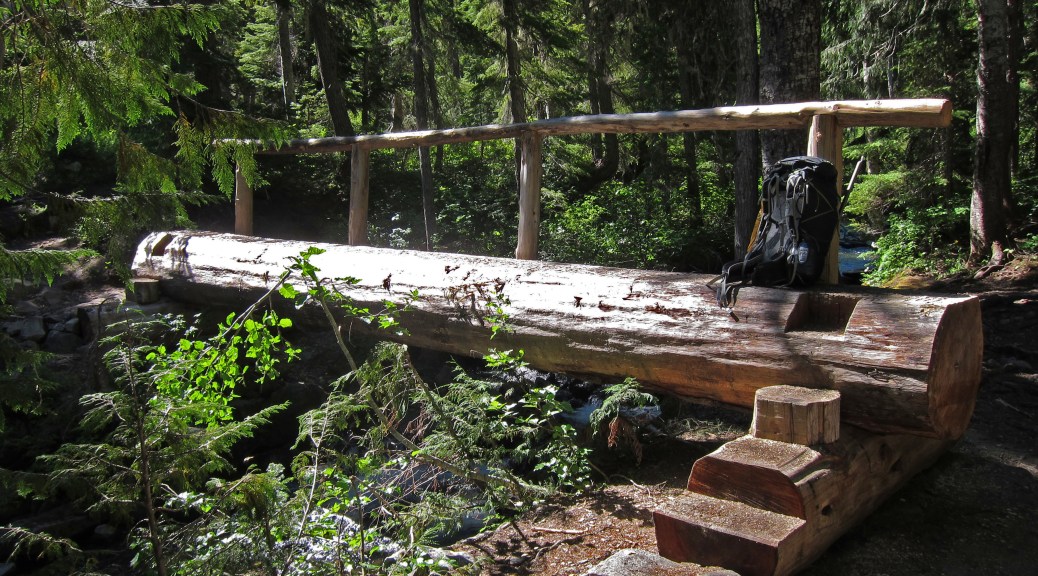
Let’s be honest about this bridge. It’s artifice.
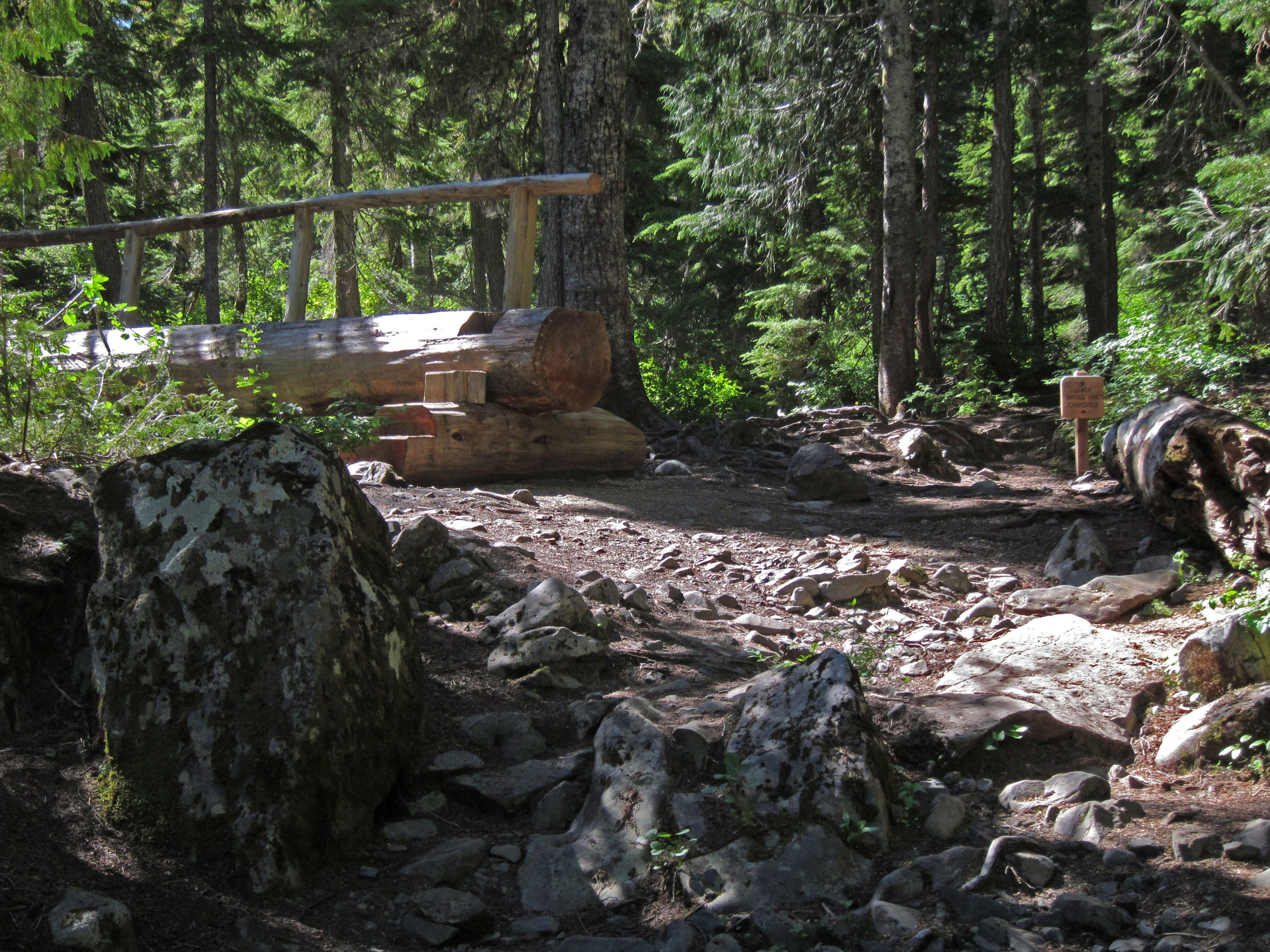
I don’t know its history, yet — am looking forward to talking with the Olympic National Park wilderness resource specialist, who hopefully will know. Evidently, the big log didn’t come from this location, but from lower elevation, somewhere else, I’d guess outside the park. It’s larger diameter than any tree in the vicinity. And it’s second growth, unlike the surrounding forest: take a look at the wide rings in the cross-section. The wood hasn’t grayed yet, so the bridge is quite new, built in Olympic National Park Wilderness since congressional designation of that Wilderness in 1988. Apparently, it was dropped into place by a Big helicopter. Note the steel staples in the log ends, for attaching cables to guide it onto its foundations as it descends in its sling. Skyhook. Technological magic. (What would Thoreau think of this?)
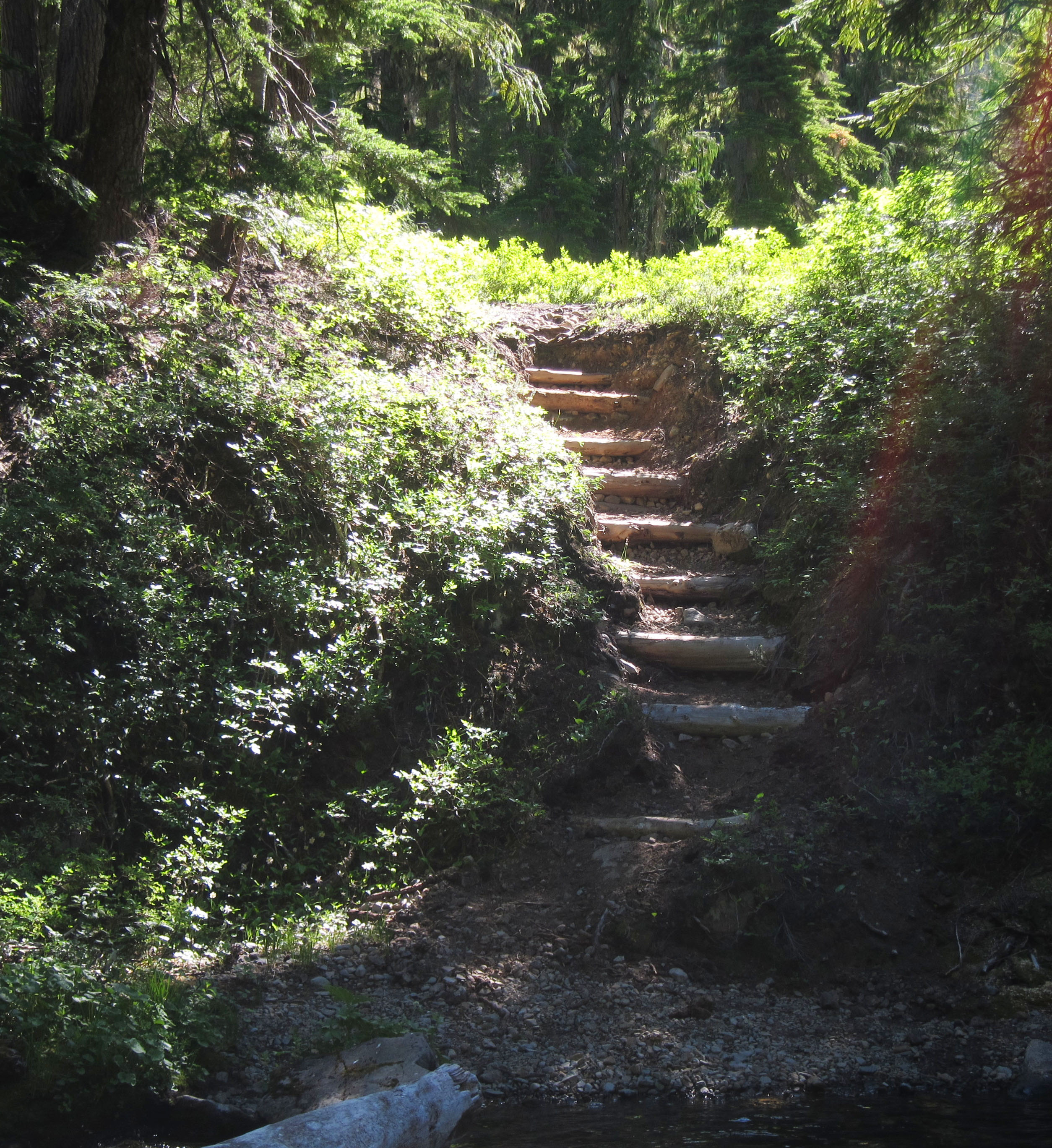
A sign in matching style points hikers to nearby designated campsites.Downstream from the bridge, a ford across the creek provides access for stock. The Park Service provides a log stairway for them to climb out the uphill bank. This artifice decreases erosion and creates a sharp edge between wild land and human construction. People and domestic animals stay on the constructed side of the boundary.
Here’s what I like best: Seems that as the crew was finishing up the bridge, they noticed that one of the railing posts was loose. So one of the gals/guys picked up a felling wedge they happened to have around & pounded it into the crack. Looking at the wedge there today, I can see them doing it. There’s a genuineness to appreciate, a making-do with materials at hand that fits what I know of living in wild country, bricolage.
What’s more natural here, the skyhooked bridge or the bright green plastic wedge?
The upcoming backcountry planning for Wrangell-St. Elias National Park & Preserve in Alaska should address parallel questions. When we’re aware of them, we’re in position to address clear value choices. Otherwise, it’s easy to live within our preconceptions, stay in our comfort zone, and never encounter the wild, contradictory and mysterious. Wilderness should be, I think, about real encounter.
I backpacked this week in Olympic National Park’s alpine gem, the trail following the High Divide between the the Seven Lakes Basin and Hoh Valley, looking across to Mt. Olympus. The place is both very attractive to hikers and in congressionally designated Wilderness. The Park Service handles the potential for crowds by issuing a limited number of permits for camping in specified areas. Each small area, more or less a few hundred yards across, contains between six and eleven campsites, marked with numbered posts. Camping outside these sites is illegal, and hikers are asked not to leave the trails. The trails are mindfully located and constructed, with stone steps and retaining walls, crafted logwork bridges, and hewn log slab boardwalks in wet spots.
The stonework on the upper trail, but also the entire trail system that I saw on this trip was at a particular aesthetic design standard, a human construction quite something in itself, really beautiful and in my view appropriate in this location, but hardly untrammeled. Even with budget cuts, the Park Service is keeping it maintained. I came across boardwalk reconstruction.
On the High Divide/Seven Lakes Basin Loop: Sol Duc Valley trail at ~2500′ elevation
Trail through Sol Duc Park, leading to the High Divide
Stone retaining wall along the trail through Sol Duc Park
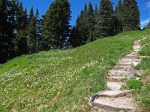
High Divide trail with stone steps & avalanche lilies
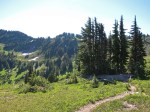
Seen here from the High Divide Trail, Seven Lakes Basin is unaltered by campsites or social trails. Designated campsites are tucked away, not visible.
Park Service-designated campsite in Heart Lake area
Camping near Heart Lake is limited to numbered, visually unintrusive sites nestled under trees.
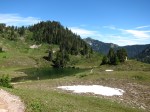
Unlike many heavily visited alpine areas, vegetation around Heart Lake is largely untrampled. Note privy on rise at right.
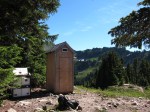
Heart Lake privy with helicopter-ready poop containers
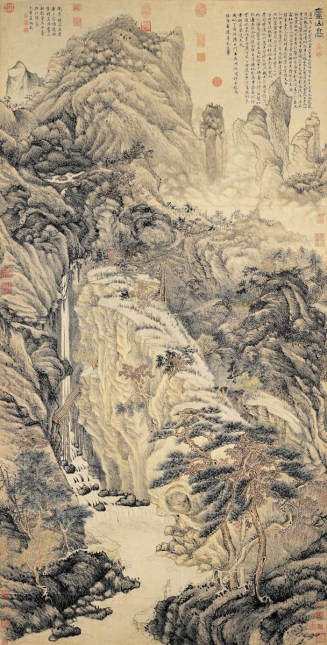
Lofty Mount Lu (廬山高) Shen Zhou (沈周, 1427-1509), Ming Dynasty (1368-1644) Hanging scroll, ink and colors on paper, 193.8 x 98.1 cm, National Palace Museum, Taipei. Note trail switchbacks overlooking the waterfall.
The design aesthetic is a combo of traditional Chinese (refined, meditative) with American West frontier materials. Maybe we could call it “Sunset Magazine/National Park Service” style. Layout fits principles taught in landscape architecture school and appreciated in the Ming Dynasty.
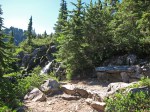
The trail up to Heart Lake is sited to blend with the land similarly to the path in the Chinese painting.
Stone steps and bench at trail switchback overlooking waterfall, Sol Duc Park.
Among hikers and park staff I met, there’s a general expectation that hikers’ behavior would fit with the values this style embodies. The permit process, requiring advance planning, going to a park office, filling out forms and interacting with officials, likely serves an effective filter, screening out those whose values don’t fit. Wild people aren’t welcomed.
Is it wilderness? For sure, the land beyond the borders of the trails and campsites fits the criteria. What you see from the trail is wild. But you don’t go there. It’s a “look, don’t touch” wilderness, viewed from quite permanent human constructions within which you are required to stay, a willful manipulation of experience done with art, craft and skill. Even though the whole area is legally capital-W “Wilderness,” the trail and campsites are not wild, with the the wild extending from the edge of these developments.
To me the design is really quite stunning. Though not commonly done in this part of the world, the design philosphy could be carried further to include backcountry cabins, lodges, meditative buildings in the same style and intent, presumably not in this location, but somewhere. Wilderness designation is so extensive in the Pacific Northwest mountains that it pretty much precludes this opportunity. Where there is development, outside of Wilderness, it’s almost always road-accessible and car/car-campground oriented. Absence of the European-type trail-accessible hut is a void, I think. Little constituency for it here? Instead, I was hiking with $1000+ of high-tech gear on my back.
___________
The Wilderness Act of 1964, Section 2(c), Definition of Wilderness:
“A wilderness, in contrast with those areas where man and his own works dominate the landscape, is hereby recognized as an area where the earth and its community of life are untrammeled by man, where man himself is a visitor who does not remain. An area of wilderness is further defined to mean in this Act an area of undeveloped Federal land retaining its primeval character and influence, without permanent improvements or human habitation, which is protected and managed so as to preserve its natural conditions and which (1) generally appears to have been affected primarily by the forces of nature, with the imprint of man’s work substantially unnoticeable; (2) has outstanding opportunities for solitude or a primitive and unconfined type of recreation…”
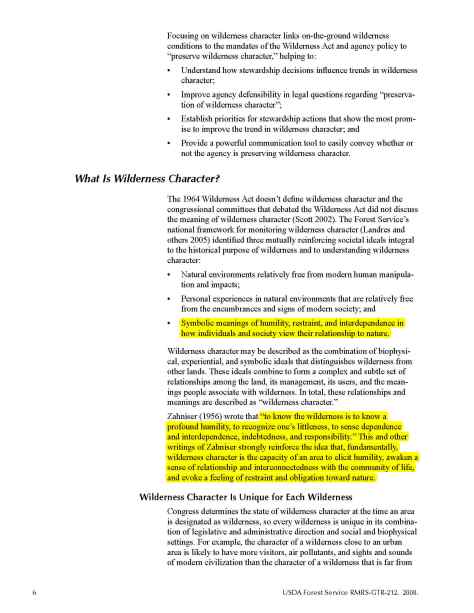
wilderness character is … the combination of biophysical, experiential, and symbolic ideals that distinguish wilderness from all other lands.
…These ideals form a complex set of relationships between the land, its management, and the meanings people associate with wilderness. … All wildernesses, regardless of size, location, or any other feature, are unified by this statutory definition of wilderness. These four qualities of wilderness are:
• Untrammeled – wilderness is essentially unhindered and free from modern human control or manipulation.
• Natural – wilderness ecological systems are substantially free from the effects of modern civilization.
• Undeveloped – wilderness is essentially without permanent improvements or modern human occupation.
• Outstanding opportunities for solitude or a primitive and unconfined type of recreation – Wilderness provides outstanding opportunities for people to experience solitude or primitive and unconfined recreation, including the values of inspiration and physical and mental challenge.
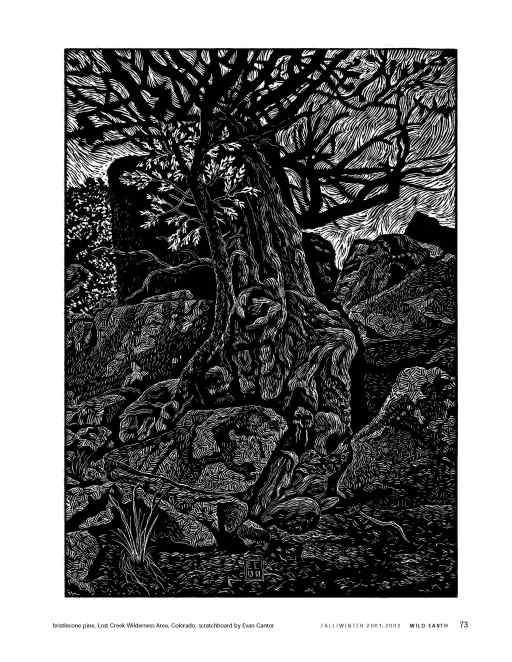
Evan Cantor’s illustration for Doug Scott’s article about “untrammeled wilderness character” in Wild Earth, the magazine of the Wildlands Project, showing a landscape aesthetic similar to Ming Dynasty art. To what extent is American understanding of wilderness sourced in this tradition of Chinese culture, as well as Thoreau, Muir and Robert Marshall? What ambiguities and conflicts does that imply?
In his opinion piece on “Privacy and the Threat to the Self” in today’s NY Times, Michael P. Lynch discusses how information technology, including megadata analysis, potentially alters the existence of independent selves.
Will be interesting to compare this loss of self with the loss of self that occurs with enlightenment, in Buddhist terms, and the expansion & connection with the larger world in Aikido, and with the communal functioning of insect colonies. And yet Buddhism, Aikido, Christianity, etc., each feature selves who individually achieve and are the paradigmatic exemplars. Same in Nazism.
An ongoing inquiry into change, stability and connecton, by Ben Shaine












 This entry began as a reflection into Serres’ use of “path” and “superhighway” to describe intellectual inquiry and careers. As a young scholar, he decided not to stay on the currently dominant superhighways.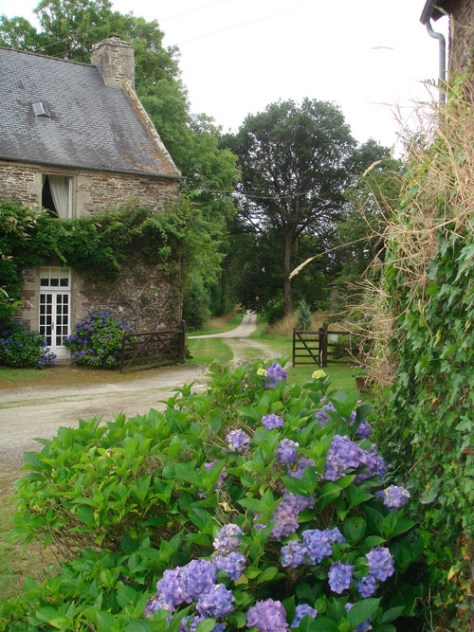





 Let’s be honest about this bridge. It’s artifice.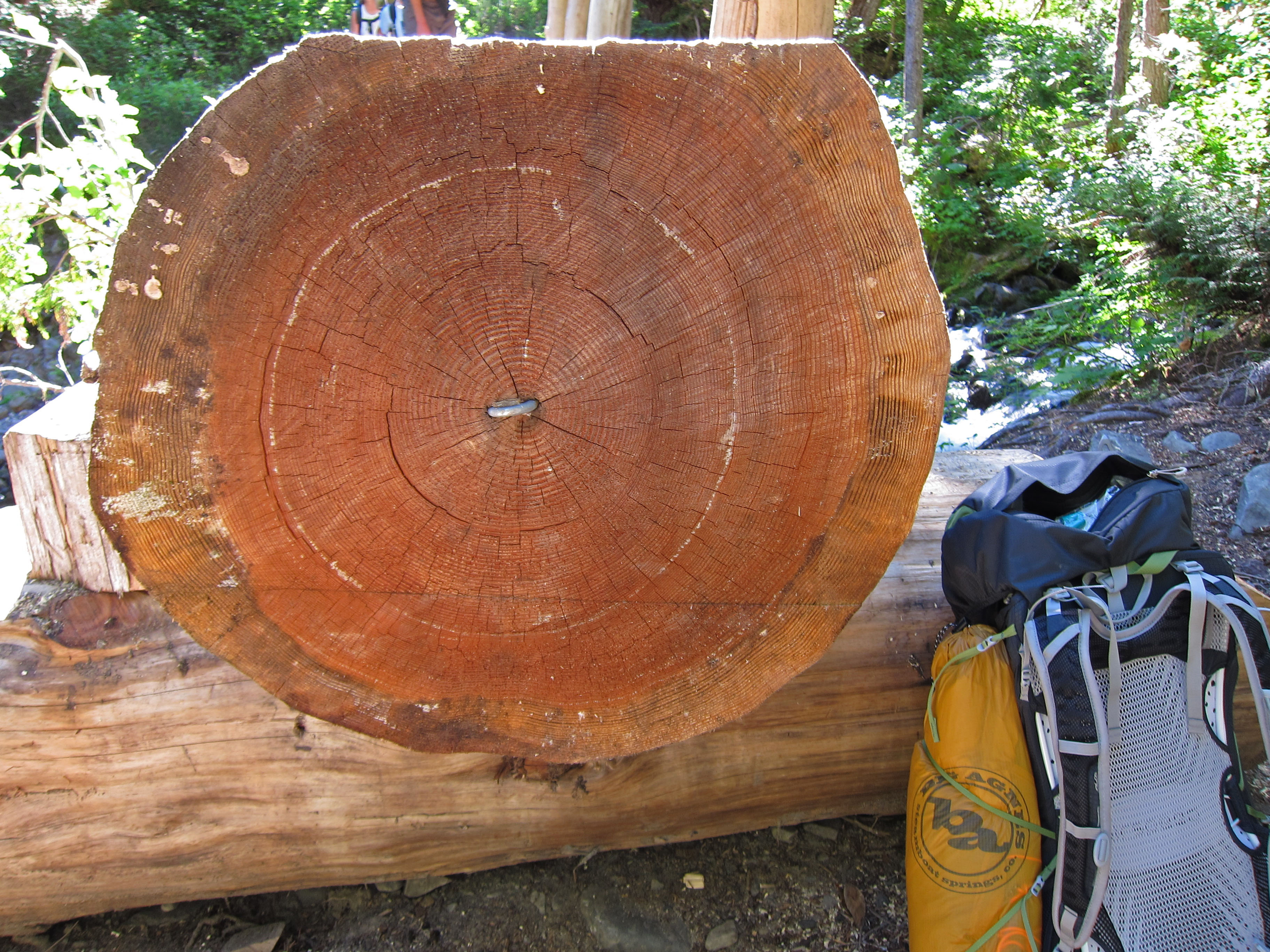

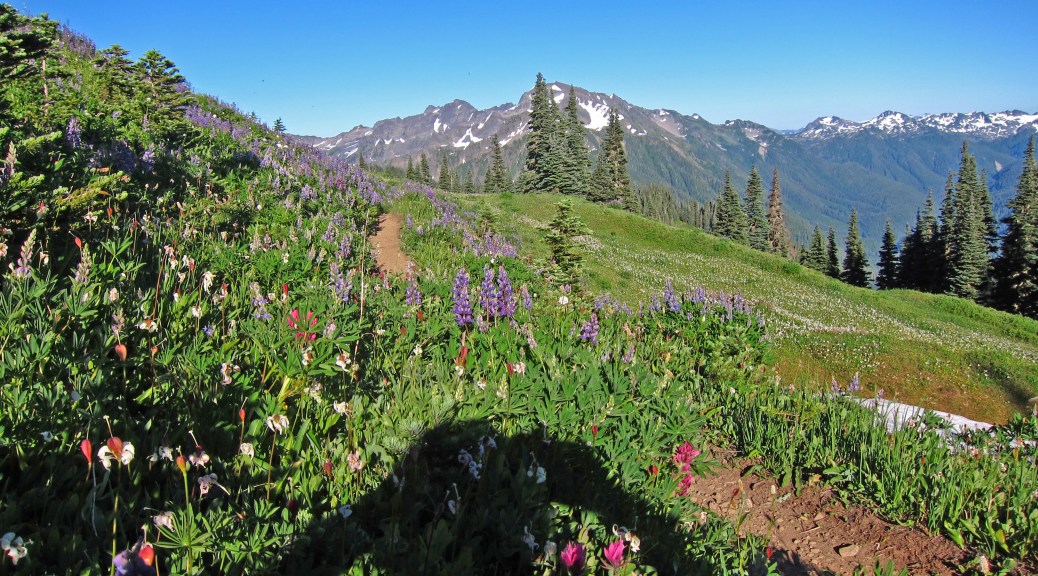
 I backpacked this week in Olympic National Park’s alpine gem, the trail following the High Divide between the the Seven Lakes Basin and Hoh Valley, looking across to Mt. Olympus. The place is both very attractive to hikers and in congressionally designated Wilderness. The Park Service handles the potential for crowds by issuing a limited number of permits for camping in specified areas. Each small area, more or less a few hundred yards across, contains between six and eleven campsites, marked with numbered posts. Camping outside these sites is illegal, and hikers are asked not to leave the trails. The trails are mindfully located and constructed, with stone steps and retaining walls, crafted logwork bridges, and hewn log slab boardwalks in wet spots.



 Living on Unstable Ground