
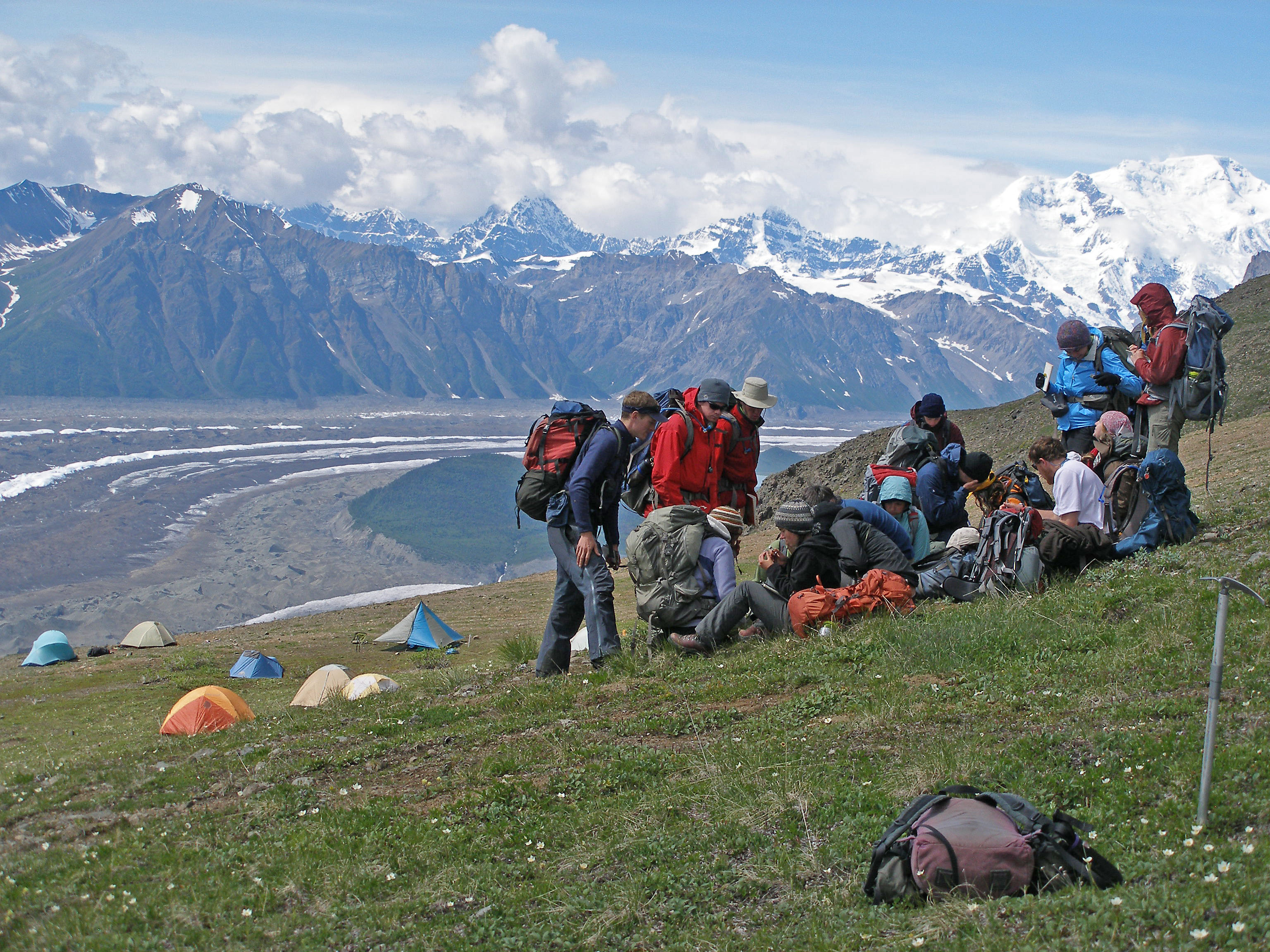
The Wrangell-St. Elias Mountains offer an extraordinary setting for learning about change and stability. Mountains rise as rivers and glaciers carry them away. Plants establish themselves on newly exposed ground. Relationships among rock, water, climate, and living organisms shape a landscape whose apparent permanence depends partly on how long—and how closely—we look.
My writing and teaching here explore ecological succession and adaptation, the movement of energy and materials, and the processes that build and reshape mountains. These are ways into understanding complex systems: how patterns persist amid change, how relationships shape what can happen, and how gradual processes sometimes give way to rapid transformation.
The inquiry is also cultural. How do people live with change and instability? How do communities take shape in a place where weather, distance, and the movement of water and ice continually affect everyday decisions? Questions of access, conservation, and land use bring natural history into public life.
Wilderness enters this work both as a legal designation and as an experience of wildness. Scientific study, art, and contemplative practice offer different ways of attending to a world whose activity exceeds our plans and descriptions. Learning to live consciously and intimately within that world is part of what draws me to the Wrangells.
Explore further
Wrangell Mountains Field Studies brings students into sustained engagement with the landscape through fieldwork, observation, and discussion.
Wrangells Mammoths considers evidence of the region’s past environments.
Curtis and Loy Green manuscripts & art offers accounts and paintings from two longtime residents whose lives were closely bound to the Wrangells.
Wildlands Policy connects the place with questions of conservation, access, and public decisions.
Publications gathers related writing, presentations, and planning documents.

