How to teach

Moshe Feldenkrais
Moshe Feldenkrais

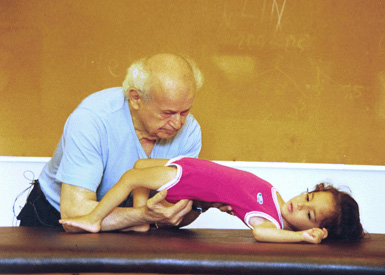
When I think of the great teachers I have known, I see this is how they taught:

Imagine a dancing party attended by a man who never dances,
for reasons best known to himself. He always declines all
invitations to participate saying that he does not know how.
One woman, however, likes the man sufficiently to persuade
him to take the floor. Moving herself, she somehow manages
to make him move too. The dance is not very complicated, and
after a few awkward moments when his ear tells him that the
music has something to do with it, he becomes conscious that
her movements are rhythmical. Nevertheless, he is relieved
when the dance stops and he can return to his seat and
breathe again. At the end of the evening he finds he can follow
her movements and steps more easily, and can even avoid
bumping into her feet. Half thinking, he feels that perhaps he
has not performed so badly, although he knows that he still
cannot dance.

After going to a second party, he makes sufficient progress
to shake his conviction that dancing is not for him. At the next
party, finding a woman left sitting alone like himself, he asks
her to dance, still protesting that he is not very good. Ever
since then he has danced, forgetting to begin with an apology.

Consider the woman who could dance, and how she made a
pupil or client dance also, without teaching musical rhythms,
dancing steps, and all the rest of it. Her friendly attitude and
her experience made him learn without any formal teaching.
A certain kind of knowledge can pass from one person to
another without a healing touch. However, the man must
have learned to use his legs, hands, and the rest of him before
a friendly touch could help him to use his experience and learn
to dance so easily. He learned notwithstanding his ignorance
of his latent ability.

— Moshe Feldenkrais. The Elusive Obvious or Basic Feldenkrais. Cupertino, Calif: Meta Publications, 1981, p. 8.

Thanks to Tres Hofmeister for leading me to Feldenkrais.

Engaged and detached

David Brooks
David Brooks
Josh Haner photo/NY Times

In his fine April 29 column, “Engaged or Detached?,” David Brooks says that the person who writes about politics and policy has a choice: She can be an engaged activist supporting a cause, who “provides arguments for the party faithful and builds community by reminding everyone of the errors and villainy of the opposing side.” Or she can be detached, more a teacher than an activist, “shaping people’s perceptions of underlying reality and hoping that she can provide a context in which other people can think.” Or somewhere on the continuum between these two. He concludes,

The detached writer understands that, at the top level, politics is a bipolar struggle for turf. But the real fun is down below, sparking conversations about underlying concepts, underlying reality and the underlying frame of debate.

Not fair! — Brooks is giving the detached writer all the fun. Engaged activists deserve it, too. In my experience, the strategic advocate frequently does this sparking and reframing, morphing and broadening her coalition, open to questioning assumptions. I saw Mo Udall, congressional leader of the historic Alaska lands act conservation effort in the 1970’s, do that with his Lincolnesque humor.* Similar to the writer, the engaged activist works within a continuum between mobilizing the faithful and exploring curiously for ways to blend with others and move in new ways.

* “A Lincolnesque leader is confident enough to be humble — to not feel the need to bluster or dominate, but to be sufficiently sure of one’s own judgment and self-worth to really listen and not be threatened by contrary advice.”
Evan Thomas and Richard Wolffe; Lincoln’s Obama; Newsweek (New York); Nov 24, 2008. cited at http://wordsmith.org/words/lincolnesque.html

Efficiency

Now “trials,” taken en bloc mean a disharmony between the self and the world with which it has to deal. Nothing is a trial when we are able to cope with it efficiently.

Underhill, Evelyn. Mysticism: A Study in the Nature and Development of Man’s Spiritual Consciousness. Jack Books, 1930, 353.

So, according to Underhill, a difficult situation is defined as disharmony between self and world. Difficulty is not inherent in the situation, but in the actor. Efficient action involves eliminating or disolving that disharmony. Those who live efficiently are not under stress.

Compare, from Wikipedia:

Efficiency is the extent to which time or effort is well used for the intended task or purpose, or the ratio of power consumed to useful power output…

Efficiency …is often used with the specific purpose of relaying the capability of a specific application of effort to produce a specific outcome effectively with a minimum amount or quantity of waste, expense, or unnecessary effort. …In general, efficiency is a measurable concept, quantitatively determined by the ratio of output to input.

… the term economic efficiency refers to the use of resources so as to maximize the production of goods and services.

A next step in this investigation is to similarly compare concepts of “power,” including from, e.g., Thich Naht Hanh’s The Art of Power with that in physics and in politics. The goal here would be to explore if it’s useful to  see two parallel constructs of being and action in these terms. Call them the sacred and the profane? Or the mystical and the economic? I wonder whether Eliade gets into this. (It’s been forty years since I read The Sacred and the Profane.)

It’s not just that the two ways are different. What’s interesting is the ways they are similar. For example, in Aikido these terms are both structural-mechanical, in the anatomical and physiological sense, and emotional-spiritual, in the sense that Underwood and Thich Naht Hahn use them.

Are the similarities just analogies arising from abstractions in our heads, or do they reflect something basic in the real world? The engineer might call the mystic’s language imprecise and meaningless. A mystic might see the engineer’s concepts as a reification and oversimplification of a broader view that incoporates them, what Eliade would call mythological, “tied to cosmic structures and rhythms.”

What happens when both viewpoints are held simultaneously without conflict? The disharmony disappears, efficiently.

Leighton The Return of Persephone 1891
Frederic Leighton, The Return of Persephone (1891)

Political, politics & democracy: Sheldon Wolin’s definitions

I shall take the political to be an expression of the idea that a free society composed of diversities can nonetheless enjoy moments of commonality when, through public deliberations, collective power is used to promote or protect the well being of the collectivity. Politics refers to the legitimized and public contestation, primarily by organized and unequal social powers, over access to the resources available to the public authorities of the collectivity. Politics is continuous, ceaseless, and endless. In contrast, the political is episodic, rare.
… In my understanding, democracy is a project concerned with the political potentialities of ordinary citizens, that is with their
possibilities for becoming political beings through the self-discovery of common concerns and of modes of action for realizing them.

Sheldon WolinSheldon S Wolin. “Fugitive Democracy.” Constellations 1, no. 1 (1994): 11–25, 11.
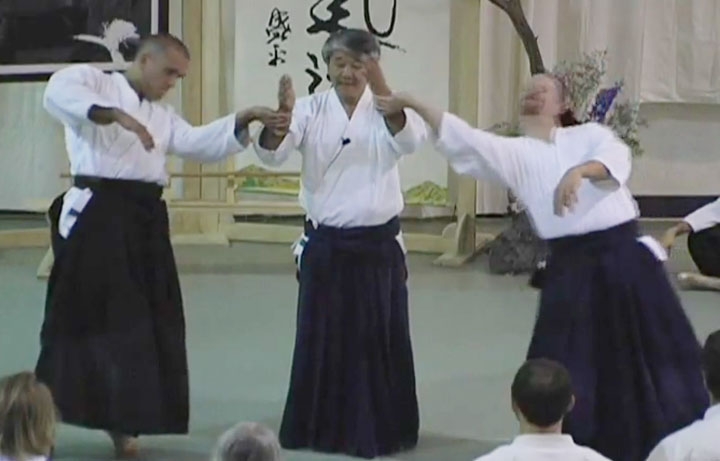

(Wolin, vibrant into his 80’s, is one of my role models.)

Should a young scholar with an interdisciplinary bent go into a standard grad program to attain full proficiency in a single discipline first?

Is interdisciplinarity a skill in itself?

Enjoyed a conversation yesterday with my long-time friend Yaakov Garb, who does interdisciplinary research at Ben Gurion University in the Negev. He does great research, I think, integrating multiple frameworks and perspectives to address complex situations, ranging from Eastern Europe urban sprawl issues to green building standards and sustainable organic farming in Bedouin villages. He and I have been able to attain pretty good, but not excellent proficiency in the variety of fields required to understand such topics. Yaakov commented he can see ways his incomplete proficiency has limited his work.

So, we discussed, what advice do we give a young person who wants to engage complex issues? Better to go into an interdisciplinary grad program, gain experience working with that complexity, and attain maybe a 60% expertise level in multiple subjects? Or first put the years into a standard, single-discipline program to get full professional skills there?

I’m not sure of the answer (probably depends on the individual student and the specific academic program), but reflecting on that conversation, it seems to me that the ability to do interdisciplinary work requires skills equivalent to what’s required for expertise in a discipline. These include ability to see & understand context and ability to work back and forth between multiple frames, seeing analogies, overlaps, differences and implications.

Given the time and effort required, it’s difficult if not impossible for a single person to attain highest proficiency in both interdisciplinary skills and in a discipline. Also, some people are genetically predisposed to be proficient in contextual thinking/multiple frames. So, encourage the abductive thinker to go the interdisciplinary path? –while also emphasizing respect for disciplinary expertise, the need to consult with those experts, the importance of getting to that 60% level which enables conversation with them, and the interpersonal skills for engaging in that conversation.

Chaisson Relational Thinking Styles coverThe wife of my friend Hal here in PT, Phyllis Chiasson, an expert in thinking styles, reports that it’s about 1 in 20 people who genetically are abductive thinkers. (See her Relational Thinking Styles and Natural Intelligence.)

On the value of getting multiple diverse learning experiences, rather than a single one in greater depth, there’s Einstein’s story: Failing to get an academic physics position, he worked in the patent office, reviewing ideas for synchronizing railroad clocks. That put him in position to apply the railroad  line & clock model to the physics situation, helping enable the theory of relativity. But his math skills were only good, not great, so sometimes he had to get help from more narrow thinkers with full expertise in math.

In most institutional settings, the abductive thinker’s role wlll be unusual, difficult, and perhaps uncomfortable, because it is intrinsically (and necessarily: imagine a society of just abductive thinkers!) a minority position and challenging to the status quo. There will be the temptation to conform. But the role is probably necessary for essential functional creativity in human communities. In our Saturday morning discussions here with Hal, Dr. Kimber Rotchford, et al., we’ve talked about how that 1/20 proportion of abductive thinkers in the population probably evolved as optimal for both maintaining ongoing stable function and generating sufficient innovation.

Crowd sourced planning & distributed management for Wrangell-St. Elias

David Bornstein’s New York Times blog piece today, Crowdfunding Clean Energy, describes how solar energy is becoming another example of networked, distributed function potentially displacing hierarchic systems. With crowd sourcing, large numbers of people are able to each make small investments directly financing renewable energy. Distributed energy production in local solar installations is increasingly competitive with large-scale power plants. As the scale of these networked/distributed efforts grows, unit costs rapidly decrease. Bornstein describes social-cultural and ethical benefits as well as clean energy production resulting from this participatory system. While it can self-sustain and grow once launched, creative and assertive initiatives are required to get it going, especially because of the institutional momentum favoring centralized megaprojects.

What if Wrangell-St. Elias backcountry planning and management is considered in this framework? How about thinking of power flow and control in land management as analogous to that in electricity production? For an array of reasons, centralizing electricity production in megaplants is inadequate to meet requirements of present circumstances. Similarly, centralized agency production and control of land management regulation is now also inadequate in Wrangell-St. Elias, because it is too inefficient and expensive to be affordable with current government budgets and staffing, because essential sources of information and expertise are located outside the agency, and because ongoing participation of locally-knowledged stakeholders is in itself a necessary aspect of the human experience for which the area is being managed.

What would crowd sourced planning and distributed management of the Wrangell-St.Elias backcountry look like? For planning, consider online forums where locals, tourists, scientists and others identify discuss and debate values, issues and solutions. The National Park Service could be forum moderator (or someone else could be), and a co-equal participant. The agency could frame up the ground rules, e.g. the legislated mandates that establish the purposes of the public parklands. Imagine University of Alaska students fanning out, recording open-ended interviews with the diversity of people and organizations who care about the place. The agency planner, perhaps aided by the students, could use qualitative research methods to organize and analyze these conversations and feed the results back into the discussion. Note the fundamental ways this approach goes beyond the usual NEPA  process, with its public meetings and agency drafts. (It would not replace NEPA requirements, but supplement them, and hopefully make environmental compliance less expensive overall, because so much problem-solving is done, and hopefully done better, by the time the impact analysis is written.)

For management, consider these forums developing in some continuing way, so that park visitors, scientists, commercial operators, park staff, other locals, and the national and international constituency for the park report on conditions in the field, and raise and discuss issues and solutions. Those who know the place on the ground from multiple perspectives would contribute to monitoring and problem solving. One role of the National Park Service in this is as keeper of the public good, responsible for keeping alert to the long-term national mandates for the parks and setting boundaries on appropriate actions. But it would not and could not be the sole monitor, manager and regulator of what happens in the park backcountry. And the agency can achieve its management responsibilities only in a context of mutual trust and successful collaboration. Key questions are how and if that can be accomplished, given the divergent perspectives, goals and behaviors of the National Park Service and the multiple other stakeholders.

That Yosemite is eliminating most backcountry ranger positions in the current budget crisis indicates what the Park Service can expect for staffing backcountry management in far-away, less-visited Wrangell-St. Elias. Even if the sequester gets resolved, long-term budgets aren’t promising. The Park Service is unlikely to be in position to plan, regulate, monitor and enforce adequately on its own.

Because of the multiple involved legal jurisdictions and legislated limits on agency control, restricted government budgets, and the diversity of stakeholders with established sense of ownership in the place, effectively Wrangell-St. Elias management becomes in many respects the management of a commons, with the added complexity of a strong, but sometimes ambiguous and self-contradictory national mandate, which the Park Service as agent of the federal landowner is required to implement. I’m looking forward to seeing how the Nobel Prize winning work of Elinor Ostrom  on common pool resources can be can be applied in the Wrangell-St. Elias case.

I can imagine my mentor, Grant McConnell, scowling at the notion of  managing national park wilderness collaboratively. His Private Power and American Democracy goes into the reasons why wilderness preservation requires moving control from local interests to national agencies with uncompromised protection enforcement mandate and authority. Grant’s critique should be fully understood and addressed, when constructing any collaborative management system.

If the general ideas sketched in here have applicability, there is need for considerable further inquiry into the realities of how such decentralized systems would actually function in Wrangell-St. Elias, the problems involved, and possible ways to solve them.

“I recognize you divine goodness”: Comparison of postures in opera & Aikido

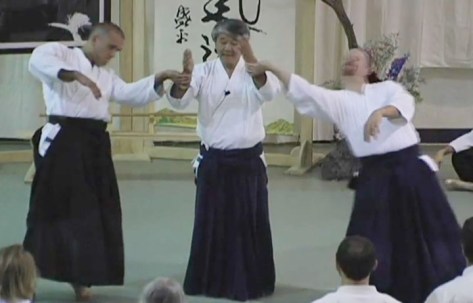
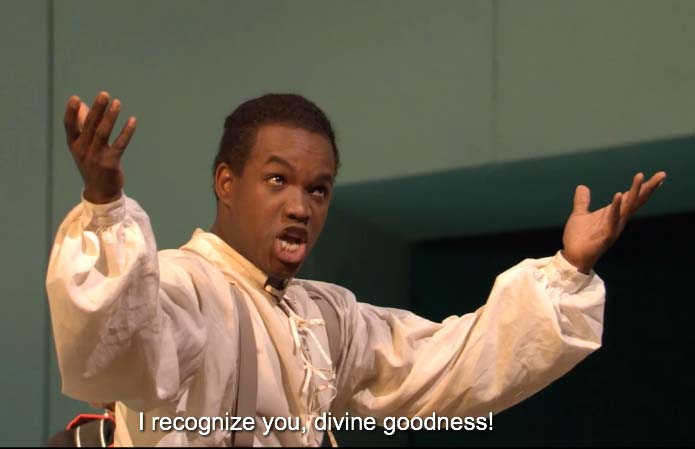
Take a look at the similarities between William Gleason Sensei, here at Aikido Eastside, and Laurence Brownlee, singing in Armida at the Metropolitan Opera. Gleason Sensei teaches how specifics of  posture and hand position create empowerment.

“I recognize you divine goodness” is the English subtitle for the line Brownlee is singing in Italian.

To what extent are the principles shown here universal? With what significance? Are they limited to the structure of the human body, or what is their wider meaning?

William Gleason Sensei at Aikido Eastside 2013 07

Lawrence Brownlee in Armida Met Opera 07Lawrence Brownlee in Armida Met Opera 02horizontal white spaceWilliam Gleason Sensei at Aikido Eastside 2013 06

Intuition, uncertainty, doubt, trust, confidence & happiness

Excerpts from today’s reading  (boldface mine):Minding the Markets book cover

Doubt, trust, and confidence are subjective mental states which intertwine with the stories we tell ourselves about what is going on. Economic life involves human relationships of exchange of longer or shorter duration. Such relationships are accompanied by the stories we tell ourselves about what is happening to them and the mental states that are stimulated. At their simplest, human relationships of exchange involve a story being told to create a belief that continued attachment to the relationship will be excitingly rewarding or a source of danger and disadvantage. The word ‘credit’ is actually based on the Latin verb ‘to believe’.

In summary my argument is that what happened in the recent financial crisis (like in many before) was the product of a shift in mental states.

organizational failures followed from the power phantastic objects exert on mental states and the way institutions have increasingly stimulated this power for advantage and then increasingly become ruled by it.

______________

Hsee, Christopher K., Luxi Shen, Shirley Zhang, Jingqiu Chen, and Li Zhang. “Fate or Fight: Exploring the Hedonic Costs of Competition.” Organizational Behavior and Human Decision Processes 119, no. 2 (November 2012): 177–186. doi:10.1016/j.obhdp.2012.07.005.

Contrary to lay intuitions, we found that individuals in an unequal assignment condition, including the disadvantaged individuals in that condition, were happier than individuals in an equal competition condition, but that this effect held only if the inequality was irreversible, the advantaged and the disadvantaged were segregated, and the disadvantaged were given some enjoyable alternative resource to consume.

current research advances the peace-of-mind notion that irreversible fate prompts one to make peace with it and feel happy. Furthermore, it breaks down the peace-of-mind idea into two different varieties: choice-free peace and opportunity-free peace. Although previous research has documented extensive evidence for choice-free peace, the present research offers initial evidence from a controlled laboratory experiment for opportunity-free peace.

______________

Dane, Erik, Kevin W. Rockmann, and Michael G. Pratt. “When Should I Trust My Gut? Linking Domain Expertise to Intuitive Decision-making Effectiveness.” Organizational Behavior and Human Decision Processes 119, no. 2 (November 2012): 187–194. doi:10.1016/j.obhdp.2012.07.009.

Research suggests that even for tasks well-suited to intuition, the effectiveness of intuitive decision making may relate to the level of expertise one has attained in the focal domain.

for certain tasks (and, perhaps more generally, for certain expertise domains), the effectiveness of intuition may begin to approach the effectiveness of analysis well before one achieves task (or domain) mastery.

It is conceivable that when individuals have at least a moderate level of domain expertise, analytical decision making disrupts or disengages the intuitive operations that typically serve experts well.

our studies suggest that, on non-decomposable tasks, intuition may indeed prove effective – to the extent one has accrued expertise within the focal domain

the greater one’s expertise within the focal domain, the more likely one’s intuitions will prove effective – particularly if the task at hand is non-decomposable. By extension, however, individuals should be cautious of ‘‘trusting their gut’’ when these conditions are not present. Likewise, organizational managers should be wary of prescribing intuitive decision making indiscriminately, even on non-decomposable tasks. Given that individuals differ in their tendency to favor intuition and analysis respectively …, domain novices who are naturally inclined to take stock in their intuitive judgments may do so with misplaced haste, particularly when intuitive decision making is widely accepted or advocated within their work context

our results suggest that as individuals attain what might be viewed as a moderate level of domain expertise, the effectiveness of intuitive decision making on non-decomposable tasks increases.

______________

Milkman, Katherine L. “Unsure What the Future Will Bring? You May Overindulge: Uncertainty Increases the Appeal of Wants over Shoulds.” Organizational Behavior and Human Decision Processes 119, no. 2 (November 2012): 163–176. doi:10.1016/j.obhdp.2012.07.003.

Abstract
This paper examines the effect of uncertainty about the future on whether individuals select want options (e.g., junk foods, lowbrow films) or instead exert self-control and select should options (e.g., healthy foods, highbrow films). Consistent with the ego-depletion literature, which suggests that self-control resembles an exhaustible muscle, coping with uncertainty about what the future may bring reduces self-control resources and increases individuals’ tendency to favor want options over should options. These results persist when real uncertainty is induced, when the salience of naturally-arising uncertainty is heightened and when individuals are able to make choices contingent upon the outcomes of uncertain events. Overall, this work suggests that reducing uncertainty in a decision maker’s environment may have important spillover effects, leading to less impulsive choices.

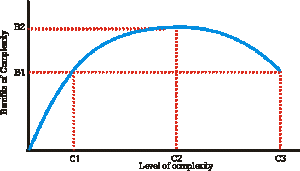
Can information expand to enable solving complex social problems, without requiring unsustainable energy consumption?

graph from Tainter, Complexity, problem solving and sustainable societies
Figure 4.1: Diminishing returns to increasing complexity, in Tainter, “Complexity, problem solving and sustainable societies.”
Would considering the potential consequences of information flow, instead of or in addition to energy, affect this graph?

Energy has always been the basis of cultural complexity and it always will be.

Getting Down to Earth coverJoseph Tainter. “Complexity, Problem Solving and Sustainable Societies.” In Getting down to Earth: Practical Applications of Ecological Economics, Island Press, 1996.

horizontal white space

The common view of history assumes that complexity and resource consumption have emerged through innovation facilitated by surplus energy. This view leads to the supposition that complexity and consumption are voluntary, and that we can therefore achieve a sustainable future through conservation. Such an assumption is substantially incorrect. History suggests that complexity most commonly increases to solve problems, and compels increase in resource use. This process is illustrated by the history of the Roman Empire and its collapse. Problems are inevitable, requiring increasing complexity, and conservation is therefore insufficient to produce sustainability. Future sustainability will require continued high levels of energy consumption to address converging problems.

Tainter, Joseph A. “Energy, Complexity, and Sustainability: A Historical Perspective.” Environmental Innovation and Societal Transitions 1, no. 1 (June 2011): 89–95.

~~~~~~~~~~~~

If readers have leads to answers to the following questions, please let me know. I’d guess the literature may well address the first set of questions. Applying physics and information theory to spiritual asceticism may be opening new ground? Unless the Dalai Lama’s seminars have gotten into it? —

What would happen if Tainter substituted the notion of “information” for “complexity?” Can information expand to support sustainability, without requiring high levels of energy consumption? Can major shifts in the organization of society, or some parts of society, result in a much greater level of function, without increase, or maybe even with decrease, of energy and materials use?

What happens if an analysis like Tainter’s, or one that considers information along with or instead of energy input, is applied to problem-solving methods practiced in spiritual communities such as Christian monasticism and Buddhist sangha?

Also, I’m curious about what happens if ecological and evolutionary notions are applied to developing organizational responses to complex management issues, such as, for example, wildlands management in a complex national park like Wrangell-St. Elias, which is the size of Switzerland, with many engaged landowners, jurisdictions and stakeholders, and conservation and preservation issues. Would it be useful to evaluate networked/collaborative management models vs hierarchical/authoritarian approaches, using information and energy input-output considerations? Could doing that give insights into how best to respond to agency budget and staffing declines, which are happening at the same time that management issues are becoming more difficult and complicated?

Networked/collaborative vs hierarchical/authoritarian management also likely differ in outcomes, beyond those typically identified in agency or business planning, but which other cultures, including but not limited to Christian or Buddhist ascetic communities, might feature. I wonder if applying information & energy input/output analysis in the planning process might tend to open up the process to an expanded set of alternatives. Maybe just by breaking set patterns of thinking & behavior?

I realize all this needs much more research and thinking to be clear & useful. Comments welcome.

An ongoing inquiry into change, stability and connecton, by Ben Shaine