Category Archives: Contemplation and action

Political, politics & democracy: Sheldon Wolin’s definitions

I shall take the political to be an expression of the idea that a free society composed of diversities can nonetheless enjoy moments of commonality when, through public deliberations, collective power is used to promote or protect the well being of the collectivity. Politics refers to the legitimized and public contestation, primarily by organized and unequal social powers, over access to the resources available to the public authorities of the collectivity. Politics is continuous, ceaseless, and endless. In contrast, the political is episodic, rare.
… In my understanding, democracy is a project concerned with the political potentialities of ordinary citizens, that is with their
possibilities for becoming political beings through the self-discovery of common concerns and of modes of action for realizing them.

Sheldon WolinSheldon S Wolin. “Fugitive Democracy.” Constellations 1, no. 1 (1994): 11–25, 11.

(Wolin, vibrant into his 80’s, is one of my role models.)

“I recognize you divine goodness”: Comparison of postures in opera & Aikido

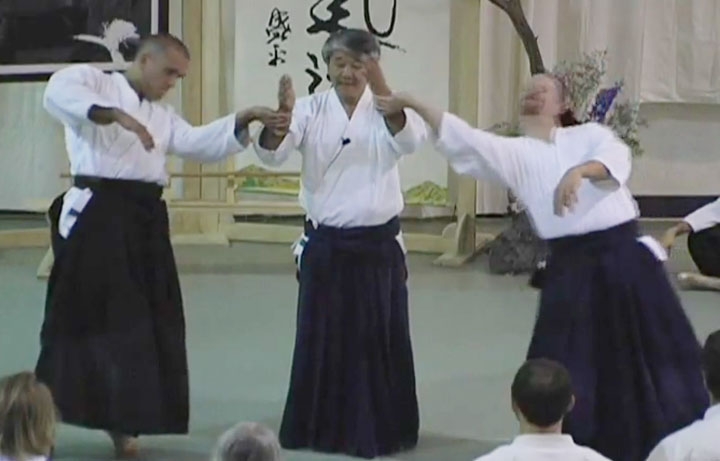
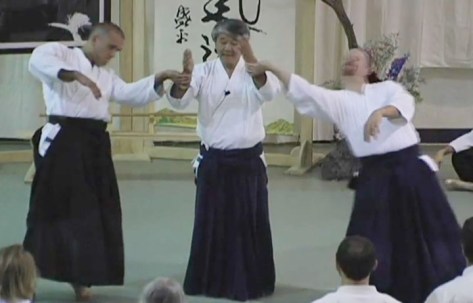
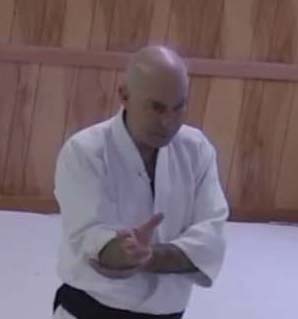
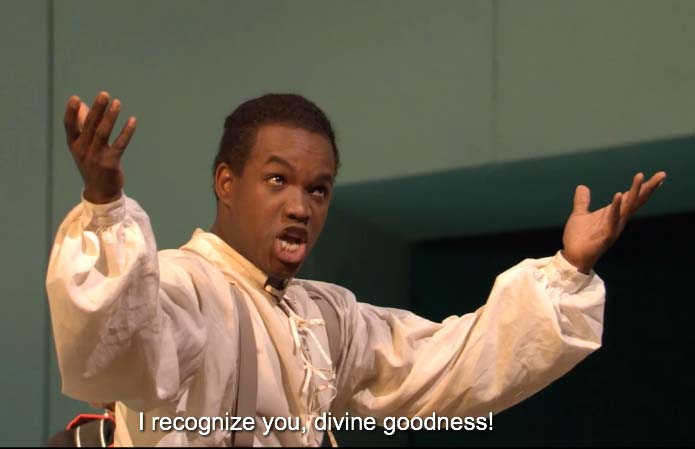
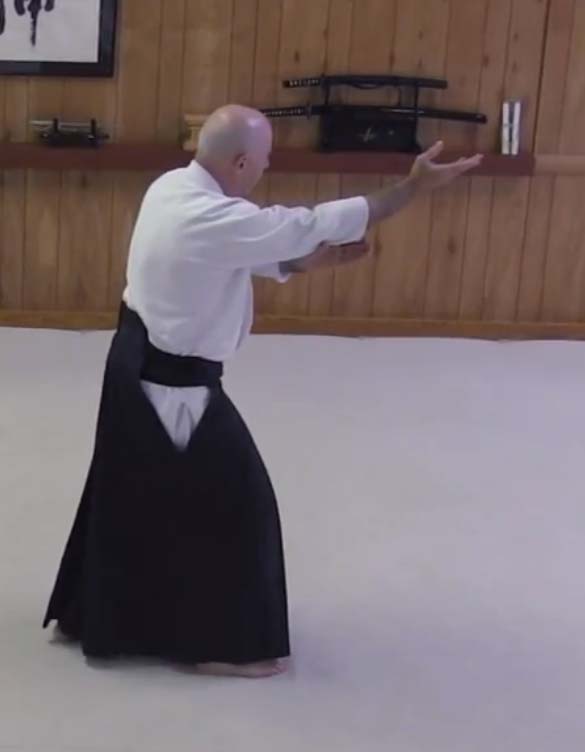
Take a look at the similarities between William Gleason Sensei, here at Aikido Eastside, and Laurence Brownlee, singing in Armida at the Metropolitan Opera. Gleason Sensei teaches how specifics of  posture and hand position create empowerment.

“I recognize you divine goodness” is the English subtitle for the line Brownlee is singing in Italian.

To what extent are the principles shown here universal? With what significance? Are they limited to the structure of the human body, or what is their wider meaning?

William Gleason Sensei at Aikido Eastside 2013 07

Lawrence Brownlee in Armida Met Opera 07Lawrence Brownlee in Armida Met Opera 02horizontal white spaceWilliam Gleason Sensei at Aikido Eastside 2013 06

Intuition, uncertainty, doubt, trust, confidence & happiness

Excerpts from today’s reading  (boldface mine):Minding the Markets book cover
Doubt, trust, and confidence are subjective mental states which intertwine with the stories we tell ourselves about what is going on. Economic life involves human relationships of exchange of longer or shorter duration. Such relationships are accompanied by the stories we tell ourselves about what is happening to them and the mental states that are stimulated. At their simplest, human relationships of exchange involve a story being told to create a belief that continued attachment to the relationship will be excitingly rewarding or a source of danger and disadvantage. The word ‘credit’ is actually based on the Latin verb ‘to believe’.

In summary my argument is that what happened in the recent financial crisis (like in many before) was the product of a shift in mental states.

organizational failures followed from the power phantastic objects exert on mental states and the way institutions have increasingly stimulated this power for advantage and then increasingly become ruled by it.

______________

Hsee, Christopher K., Luxi Shen, Shirley Zhang, Jingqiu Chen, and Li Zhang. “Fate or Fight: Exploring the Hedonic Costs of Competition.” Organizational Behavior and Human Decision Processes 119, no. 2 (November 2012): 177–186. doi:10.1016/j.obhdp.2012.07.005.

Contrary to lay intuitions, we found that individuals in an unequal assignment condition, including the disadvantaged individuals in that condition, were happier than individuals in an equal competition condition, but that this effect held only if the inequality was irreversible, the advantaged and the disadvantaged were segregated, and the disadvantaged were given some enjoyable alternative resource to consume.

current research advances the peace-of-mind notion that irreversible fate prompts one to make peace with it and feel happy. Furthermore, it breaks down the peace-of-mind idea into two different varieties: choice-free peace and opportunity-free peace. Although previous research has documented extensive evidence for choice-free peace, the present research offers initial evidence from a controlled laboratory experiment for opportunity-free peace.

______________

Dane, Erik, Kevin W. Rockmann, and Michael G. Pratt. “When Should I Trust My Gut? Linking Domain Expertise to Intuitive Decision-making Effectiveness.” Organizational Behavior and Human Decision Processes 119, no. 2 (November 2012): 187–194. doi:10.1016/j.obhdp.2012.07.009.

Research suggests that even for tasks well-suited to intuition, the effectiveness of intuitive decision making may relate to the level of expertise one has attained in the focal domain.

for certain tasks (and, perhaps more generally, for certain expertise domains), the effectiveness of intuition may begin to approach the effectiveness of analysis well before one achieves task (or domain) mastery.

It is conceivable that when individuals have at least a moderate level of domain expertise, analytical decision making disrupts or disengages the intuitive operations that typically serve experts well.

our studies suggest that, on non-decomposable tasks, intuition may indeed prove effective – to the extent one has accrued expertise within the focal domain

the greater one’s expertise within the focal domain, the more likely one’s intuitions will prove effective – particularly if the task at hand is non-decomposable. By extension, however, individuals should be cautious of ‘‘trusting their gut’’ when these conditions are not present. Likewise, organizational managers should be wary of prescribing intuitive decision making indiscriminately, even on non-decomposable tasks. Given that individuals differ in their tendency to favor intuition and analysis respectively …, domain novices who are naturally inclined to take stock in their intuitive judgments may do so with misplaced haste, particularly when intuitive decision making is widely accepted or advocated within their work context

our results suggest that as individuals attain what might be viewed as a moderate level of domain expertise, the effectiveness of intuitive decision making on non-decomposable tasks increases.

______________

Milkman, Katherine L. “Unsure What the Future Will Bring? You May Overindulge: Uncertainty Increases the Appeal of Wants over Shoulds.” Organizational Behavior and Human Decision Processes 119, no. 2 (November 2012): 163–176. doi:10.1016/j.obhdp.2012.07.003.

Abstract
This paper examines the effect of uncertainty about the future on whether individuals select want options (e.g., junk foods, lowbrow films) or instead exert self-control and select should options (e.g., healthy foods, highbrow films). Consistent with the ego-depletion literature, which suggests that self-control resembles an exhaustible muscle, coping with uncertainty about what the future may bring reduces self-control resources and increases individuals’ tendency to favor want options over should options. These results persist when real uncertainty is induced, when the salience of naturally-arising uncertainty is heightened and when individuals are able to make choices contingent upon the outcomes of uncertain events. Overall, this work suggests that reducing uncertainty in a decision maker’s environment may have important spillover effects, leading to less impulsive choices.

Can information expand to enable solving complex social problems, without requiring unsustainable energy consumption?

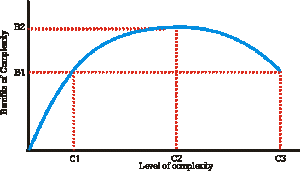
graph from Tainter, Complexity, problem solving and sustainable societies
Figure 4.1: Diminishing returns to increasing complexity, in Tainter, “Complexity, problem solving and sustainable societies.”
Would considering the potential consequences of information flow, instead of or in addition to energy, affect this graph?

Energy has always been the basis of cultural complexity and it always will be.

Getting Down to Earth coverJoseph Tainter. “Complexity, Problem Solving and Sustainable Societies.” In Getting down to Earth: Practical Applications of Ecological Economics, Island Press, 1996.

horizontal white space

The common view of history assumes that complexity and resource consumption have emerged through innovation facilitated by surplus energy. This view leads to the supposition that complexity and consumption are voluntary, and that we can therefore achieve a sustainable future through conservation. Such an assumption is substantially incorrect. History suggests that complexity most commonly increases to solve problems, and compels increase in resource use. This process is illustrated by the history of the Roman Empire and its collapse. Problems are inevitable, requiring increasing complexity, and conservation is therefore insufficient to produce sustainability. Future sustainability will require continued high levels of energy consumption to address converging problems.

Tainter, Joseph A. “Energy, Complexity, and Sustainability: A Historical Perspective.” Environmental Innovation and Societal Transitions 1, no. 1 (June 2011): 89–95.

~~~~~~~~~~~~

If readers have leads to answers to the following questions, please let me know. I’d guess the literature may well address the first set of questions. Applying physics and information theory to spiritual asceticism may be opening new ground? Unless the Dalai Lama’s seminars have gotten into it? —

What would happen if Tainter substituted the notion of “information” for “complexity?” Can information expand to support sustainability, without requiring high levels of energy consumption? Can major shifts in the organization of society, or some parts of society, result in a much greater level of function, without increase, or maybe even with decrease, of energy and materials use?

What happens if an analysis like Tainter’s, or one that considers information along with or instead of energy input, is applied to problem-solving methods practiced in spiritual communities such as Christian monasticism and Buddhist sangha?

Also, I’m curious about what happens if ecological and evolutionary notions are applied to developing organizational responses to complex management issues, such as, for example, wildlands management in a complex national park like Wrangell-St. Elias, which is the size of Switzerland, with many engaged landowners, jurisdictions and stakeholders, and conservation and preservation issues. Would it be useful to evaluate networked/collaborative management models vs hierarchical/authoritarian approaches, using information and energy input-output considerations? Could doing that give insights into how best to respond to agency budget and staffing declines, which are happening at the same time that management issues are becoming more difficult and complicated?

Networked/collaborative vs hierarchical/authoritarian management also likely differ in outcomes, beyond those typically identified in agency or business planning, but which other cultures, including but not limited to Christian or Buddhist ascetic communities, might feature. I wonder if applying information & energy input/output analysis in the planning process might tend to open up the process to an expanded set of alternatives. Maybe just by breaking set patterns of thinking & behavior?

I realize all this needs much more research and thinking to be clear & useful. Comments welcome.

Earlham’s core principles of wilderness education: Living in a “positive state of non-expectancy”

Strikingly similar to the values of the Wrangell Mountains Center —

Core principles guiding the Earlham College wilderness program educational mission:

  • The Adventuresome Spirit
    Viewing obstacles as challenges to be overcome. Actively seeking out opportunities to learn and to push oneself outside the “comfort zone.” Living life in a “positive state of non-expectancy” — allowing for appreciation of the trail magic that can come from being present and aware of the adventuresome potential of each moment.
  • Sense of Place
    A connection to the land we are traveling through such that we are not just tourists or passersby but, rather, we become changed by our relationship with the land and its stories. As modern life increasingly separates us from such relationships, the principle of gaining a “sense of place” on wilderness trips reminds us that this value is critical toward the creation of a personal and a larger community-based environmental ethic.
  • Servant Leadership
    Servant leadership is defined as the ability to think of others through the acquired skills of listening, observation, awareness, empathy, acceptance and foresight. It is the difference between caring “about” something or someone and “caring for” it. It is an active behavior that happens in lots of little ways. A servant leader constantly thinks about how to help his or her group in small and big ways. A servant leader is also aware of “giving back” in small and big ways to the people and the places he or she experiences. Finally, a servant leader understands that knowledge and experiences acquired have moral consequences and leaves changed as well as committed to working toward putting that change into service.
  • The Contemplative Spirit
    Kurt Hahn, the founder of Outward Bound and one of the central figures in the field of outdoor and experiential education created the 7 Laws of Salem which were his goals for operating his first school in England. One of his 7 laws was to “provide periods of silence, following the great precedent of the Quakers. Unless the present day generation acquires early habits of quiet and reflection, it will be speedily and prematurely used up by the nerve-exhausting and distracting civilization of today.” Hahn wrote that in the 1920’s. The art of contemplation and reflection is what brings meaning to our lives. It is also fundamental to the kind of deep and rigorous observation and scholarship we value at Earlham. On course, there will be many opportunities to practice the contemplative spirit.There will be “small” moments, for example, it is common to begin major meals with a moment of silence. There will also be “larger” ones like silent paddles and hikes, reflective solo’s, and observation activities.
  • Simplicity
    Simplicity and simple living is comprised of two parts: inward simplicity and outward simplicity. The two are, of course, connected. Inward simplicity can be defined by the priorities and goals that you have in your life and how you make decisions about them. Outward simplicity is how you manifest those priorities and goals to the world. Wilderness courses are all about simple living- both inwardly and outwardly. You carry everything you need on your back or in your canoe. You eat simply but heartily. You will have a minimum of possessions and “modern” distractions. This outward simplicity, we hope, will encourage inward simplicity- allowing you to reflect on what is truly important to you and how you want to go about “walking joyfully on this earth” as George Fox, founder of the Religious Society of Friends” once famously said.

Deconstruction of self-existence allows “something else” to shine forth

From the Introduction, page 4, by David Loy in his edited collection Healing Deconstruction: Postmodern Thought in Buddhism and Christianity:

According to Madhyamika, our taken-for-granted world is mentally-constructed by our delusive attribution of self-existence to objects, which makes us experience that world as a collection of discrete things interacting in space and time; and that leads to suffering insofar as we understand ourselves to be such self-existing things, who are nonetheless subject to the ravages of time and change–who are born only to fall ill, grow old, and die. Merely by subverting such ontological claims, and without offering any views of its own, the Buddhist deconstruction of such self-existence (especially our own) can allow “something else” to shine forth.

In my recent training experience, I have the sense that Aikido is physically deconstructing my perception of an independently-acting self.

Several close friends believe we have immortal souls. Not sharing that faith makes Marci’s impending death more lonely for me, a forever loss. Far from belief in a discrete immortal soul that does not die, the Madhyamika Buddhist view is that we don’t have that individuality, even in this life. But it seems to be a view into a bigger space.

SunyataThere are now brief moments of doing it right in my otherwise relatively unskilled Aikido practice, when, with no push and no pull, I move someone much bigger than myself — it happens, not often! It is without effort, but by congruence. Something else shines forth?

Breaking balance

From a conversation with Hiroshi Ikeda Sensei at his Aikido dojo in Boulder in December:

To gain control by breaking balance:

  1. Establish connection.
  2. Through attention to partner’s structure, move one point, even a little bit, to establish motion.
  3. Then creativity is possible.

All of this done relaxed, with no force or anger.

The spiritual is the study of reality: Aikido seminar with William Gleason and George Ledyard

Da_Vinci_Vitruve_Luc_Viatour
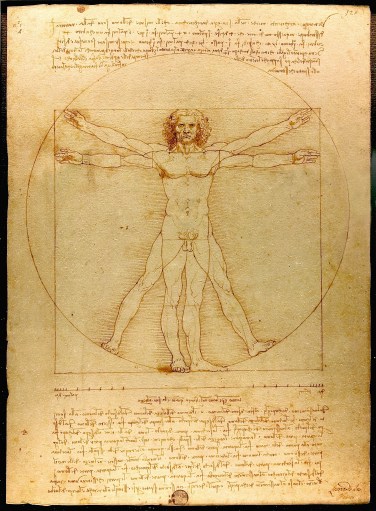
Leonardo da Vinci, Vitruvian Man, 1487
“Leonardo envisaged the great picture chart of the human body he had produced through his anatomical drawings and Vitruvian Man as a cosmografia del minor mondo (cosmography of the microcosm). He believed the workings of the human body to be an analogy for the workings of the universe.”

From the seminar at Aikido Eastside, Bellevue, January 4-6, 2013:

What is spiritual, but the study of reality.

–William Gleason Sensei

George Ledyard Sensei’s instructions:

  • Get yourself organized.
  • Make connection.
  • Do not be attached to the result.

I think:

  • “Get yourself organized” means conforming with the logos.
  • “Not being attached to the result” means not being habituated or addicted.line shortFrom lunch discussion with Sensei Gleason, Sensei Ledyard, et al.:
  • The vector to mastery is the spiritual quest.
  • Being on the vector to mastery makes endeavor worthwhile.
  • A teacher need not have achieved mastery to be worthwhile. But the difference between a worthwhile practice and a mediocre one is whether the channel is open in the direction of mastery, regardless of how far progress has been achieved.

Brion Toss, weapons sensei at Aikido Port Townsend, and I wondered about how you know whether you are on a path to mastery or are fooling yourself. I suspect that reality, action in the real world, provides the answer. As we experience on the mat, only good technique works, provided that the attack (the encounter) is genuine. If it doesn’t work, you know, because you fail. Reality, the organizing principle, the logos, provides the constraints that create the form of the practice and its evolution. It’s possible to be screened from reality by habits, fantasies and addictions — frequently happens. You can live in that undisciplined world so long as it is self-contained, does not contact with reality. Then reality penetrates with overwhelming power.

From previous Gleason Sensei seminars at Aikido Eastside: